Understanding Roof Leaks Caused by Ice Damming
Ice dams form when heat escapes from your home and melts the snow sitting on the warmer upper section of your roof. As that meltwater runs down toward the colder roof edge, it refreezes and builds a wall of ice. Eventually, the water has nowhere else to go and starts working its way under shingles, through nail holes, and into your home.
Why Ice Dams Cause Leaks
It typically starts with snow sitting on the roof during a cold snap. As warm air escapes from the living space or attic, the snow closest to the roof surface melts and travels downward until it hits the freezing overhang. That’s where the ice dam forms. Once that ridge of ice grows large enough, the meltwater backs up under your roofing materials and finds its way inside.
Why Toronto Homes Are at Higher Risk
Toronto sees an ongoing freeze-thaw pattern all winter long. Many houses in the city were built decades ago and don’t have modern attic insulation or air sealing. That combination means more heat loss, more melting snow, and more potential for ice dams.
Signs of Ice Dam Damage
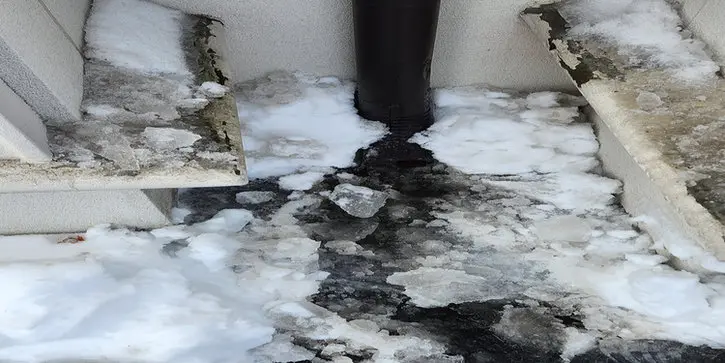
Catching ice dam issues early can prevent serious repairs. Here’s what to watch for:
Exterior Signs
- Large icicles forming along the roofline
- Thick ice buildup on the roof edge
- Water staining or ice on exterior walls
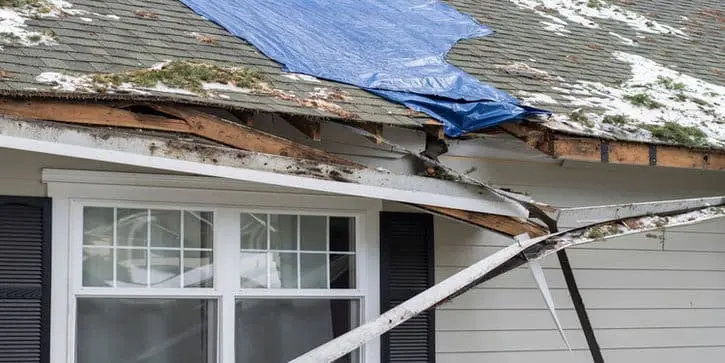
- Gutters sagging or pulling away
- Missing or lifted shingles near the eaves
Interior Signs
- Water stains on ceilings or exterior walls
- Bubbling or peeling paint
- Musty smells in upper floors or the attic
- Dripping from vents, lights, or ceiling fixtures
- Warped or buckling hardwood floors
If you’re seeing any of these, call a roofing expert right away. Ice dam leaks rarely fix themselves.
Common Roof Types Affected by Ice Dams
Flat Roofs
Flat roofs don’t shed snow as easily, so water tends to pool behind ice dams. When that water sits long enough, it stresses the membrane and can lead to major leaks. Severe cases may require flat roof repair or even replacement if the membrane has been compromised.
Sloped Shingle Roofs
Sloped roofs are vulnerable at:
- Roof edges
- Valleys
- Around dormers and vents
- Sun-exposed slopes that melt and refreeze frequently
When shingles lift or crack from ice pressure, leaks can start quickly.
Slate Roofs
Slate roofs need special attention. Ice expansion can crack tiles, loosen nails, or damage flashing. Any slate roof leak repair should be handled by roofers trained to work with slate — it’s not something a general handyman should attempt.
Emergency Ice Dam Removal
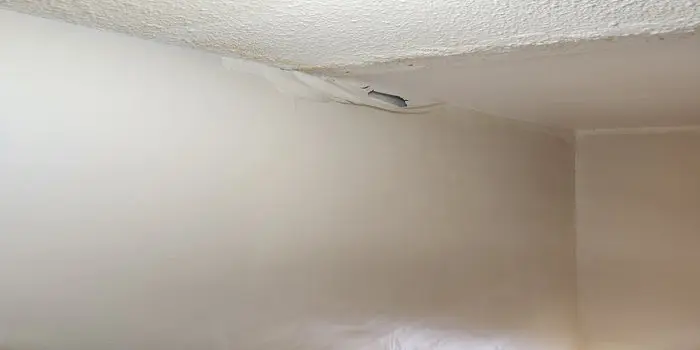
When ice dams start forming, quick action can prevent serious damage.
Safe Snow Removal
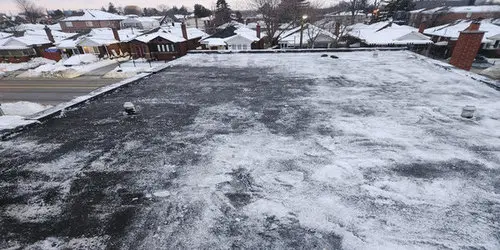
Professional roofers use tools such as:
- Long-reach roof rakes
- Steam equipment (safe for shingles, metal, and slate)
- Proper fall-arrest and winter-traction gear
Trying to remove ice dams yourself is dangerous and can easily damage the roof.
What to Avoid
Never use:
- Salt or chemical de-icers
- Hammers, chisels, or anything sharp
- Hot water
- Pressure washers
These methods can create more damage than the ice dam itself.
Professional Roof Leak Repair Solutions
Once water has made it inside, proper repair is crucial.
Immediate Repairs
Roofers will first stop active leaks by:
- Installing temporary patches
- Tarping problem areas
- Sealing around penetrations where water is entering
Full Repair Work
Once things are under control, the real repair begins:
- Replacing damaged shingles
- Repairing flashing
- Inspecting and repairing roof decking
- Fixing or replacing gutters
- Replacing wet or compromised insulation
When Full Roof Replacement Makes Sense
Replacement may be necessary when:
- Several areas of the roof are damaged
- Roof decking has started to rot
- The roof was already nearing end-of-life
Whether it’s shingle, flat, or slate, working with an experienced Toronto roofing contractor ensures the repair is done properly.
Prevention Strategies
The best fix for ice dams is stopping them before they form.
Insulation and Ventilation
A cold roof surface prevents melting. This usually means:
- Adding attic insulation
- Sealing attic air leaks
- Ensuring proper ridge and soffit ventilation
Routine Maintenance
Stay ahead of winter by:
- Scheduling yearly roof inspections
- Maintaining gutters
- Keeping tree branches trimmed back
- Staying on top of slate roof repair and maintenance
Architectural Enhancements
Some roofs benefit from:
- Ice and water shield membranes
- Heating cables in persistent problem areas
- Adjustments to overhangs or roof slopes
When to Call Toronto Roofing Professionals
Ice dam issues should always be handled by trained specialists.
Reach out to someone Immediately If:
- Water is actively leaking inside
- Large ice dams are forming
- Gutters or roof edges show structural damage
Look in to Routine Service When:
- You’re preparing for winter
- You want a professional roof inspection
- You need snow or ice removed safely
Call for Major Repairs If:
- The leak has caused interior damage
- Large areas of shingles are lifted or missing
- Slate tiles are cracked or loose
- Flat roof membranes are ponding or blistering
What causes ice dams to form on Toronto roofs?
Ice dams form when heat escapes from the home, melts the snow on the roof, and that meltwater refreezes at the colder roof edge. Over time, the ice builds up and forces water under shingles, leading to leaks.
How can I tell if an ice dam is causing a roof leak?
Common signs include water stains on ceilings, bubbling paint, dripping near exterior walls, large icicles, heavy ice along the eaves, or shingles lifting near the roof edge. If you see any of these, it’s important to get the roof inspected quickly.
Can I remove an ice dam myself?
It’s not recommended. Ice dam removal can be dangerous and DIY methods often damage roofing materials. Professional roofers use safe steaming equipment and proper techniques to remove ice without harming the roof.
Can ice dams damage flat roofs, shingle roofs, and slate roofs differently?
Yes. Flat roofs can develop water pooling behind ice, shingle roofs may have lifted or cracked shingles, and slate roofs can experience cracked tiles or loosened flashing. Each roof type needs a different repair approach.
How can homeowners prevent ice dams from forming?
Proper attic insulation, air sealing, and balanced ventilation are the best defenses. Regular roof maintenance, gutter cleaning, and early winter inspections also help reduce the risk of ice buildup and leaks.