Winter in Toronto isn’t just cold—it’s a full-on test for your roof. Between the heavy snowfall, freezing temperatures, and those brutal ice storms we get hit with every year, your roof takes a beating from November through March. And here’s what most homeowners don’t realize until it’s too late: winter doesn’t just cause damage, it reveals problems that have been hiding all year long.
At Right Choice Roofing and Repair, we’ve spent countless winters helping Toronto homeowners deal with emergency leaks, ice dam disasters, and storm damage that seemed to come out of nowhere. This guide covers everything you need to know about protecting your home during the toughest season of the year.

Why Winter is Your Roof’s Biggest Challenge
Let’s be honest—Canadian winters are no joke. We’re not dealing with a light dusting of snow and chilly mornings. We’re talking about heavy, wet snow that piles up fast, ice that forms in places you didn’t know existed, and temperature swings that go from -20°C to just above freezing in a matter of days.
Your roof deals with all of this while trying to keep your home warm and dry.
Every freeze-thaw cycle puts stress on your shingles. Every inch of snow adds weight. Ice dam creates potential for water to sneak past your defenses.
The real kicker? Most winter roof problems don’t announce themselves with a loud crash. They start small—a tiny gap where ice is forming, a shingle that lifted just slightly during that windstorm last week, a flat roof drain that’s partially blocked. Then winter amplifies these small issues into expensive emergencies.
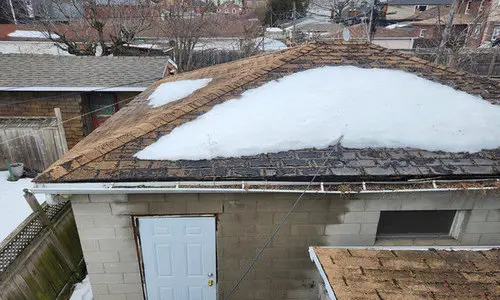
Ice Dams: The Silent Home Wrecker
If you’ve never dealt with an ice dam, consider yourself lucky. If you have, you know exactly why they’re one of the most frustrating winter roofing problems out there.
Here’s how they happen: Heat escapes from your attic and warms up the roof surface. Snow melts, runs down toward the edge, and then refreezes when it hits the colder eaves. Over time, you get a ridge of ice forming along the edge of your roof. Sounds harmless, right? Wrong.
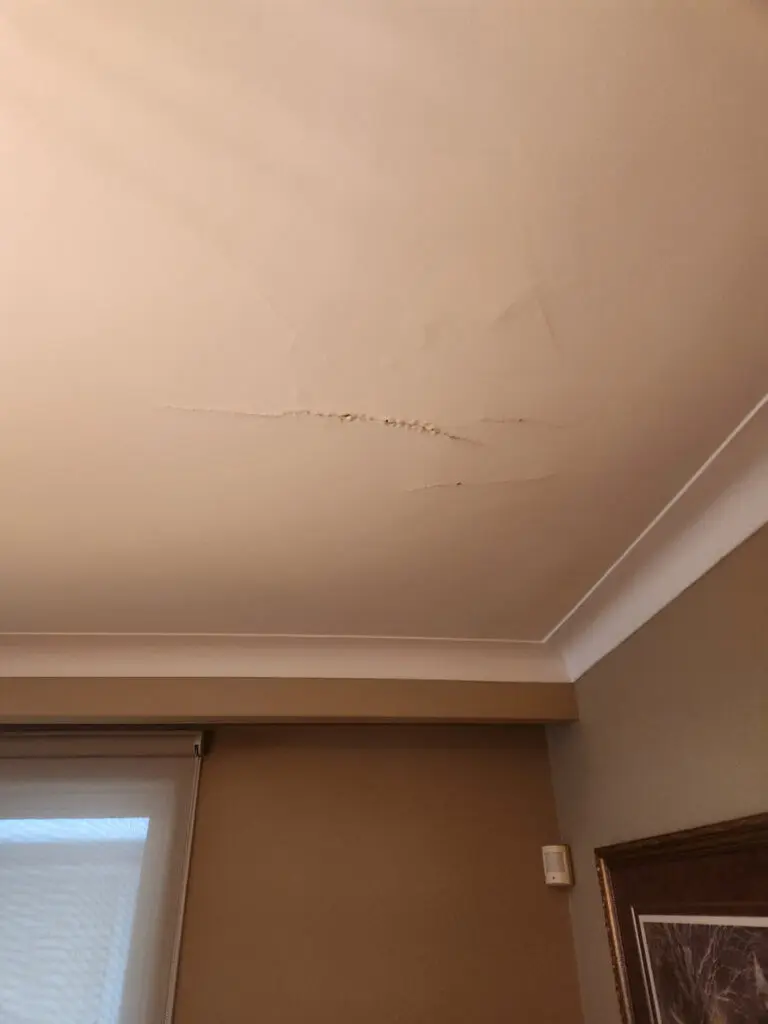
That ice ridge creates a dam. More melting snow can’t drain properly, so it backs up under your shingles. Water finds its way through gaps it would never normally penetrate. Before you know it, you’ve got water staining your ceiling, dripping down your walls, or pooling in your attic.
We’ve seen ice dams cause thousands of dollars in damage to homes that otherwise had perfectly good roofs. The water damage happens inside your walls and ceilings where you can’t see it until the problem is severe.
Warning Signs of Ice Dams
You might have an ice dam forming if you notice:
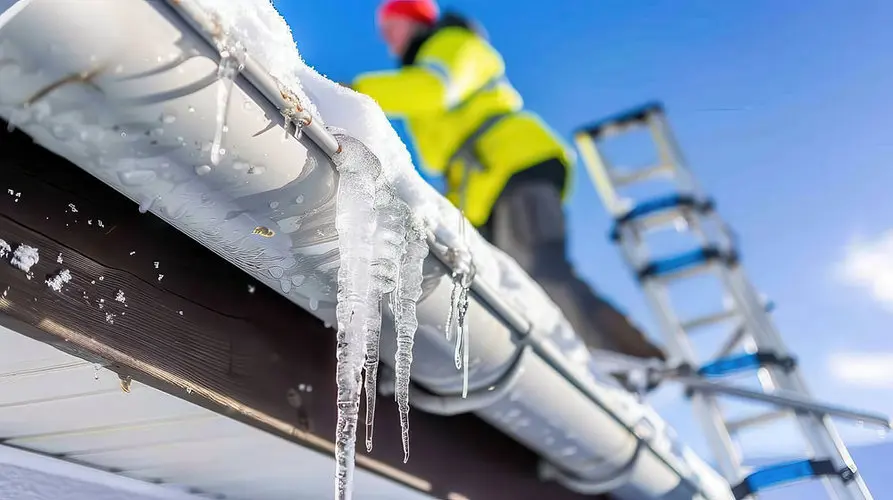
- Icicles hanging from your gutters (small icicles are normal, but large formations signal trouble)
- Ice building up along the edge of your roof in thick ridges
- Water stains appearing on exterior walls just under the roofline
- Ceiling stains or water spots near exterior walls
- Sagging gutters from the weight of ice
The tricky part about ice dams is that by the time you see water damage inside, the problem has been building for a while.
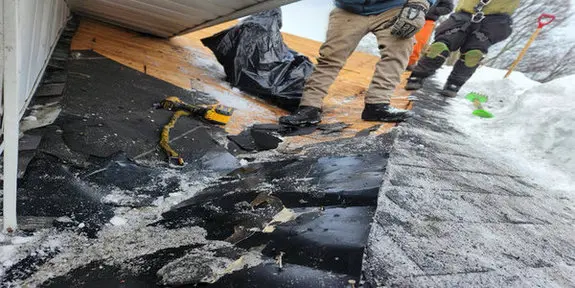
Storm Damage: When Winter Hits Hard
Toronto winters bring more than just snow. We get hit with ice storms, high winds, and blizzards that can seriously damage your roof in a single night.
Wind is particularly sneaky. It gets under loose or aging shingles and rips them right off. We’ve responded to emergency calls where entire sections of shingles were missing after a windstorm. Even if shingles don’t blow off completely, wind can lift and crack them, creating entry points for water and ice.
Ice storms create their own special kind of chaos. That thick coating of ice adds tremendous weight to your roof. Tree branches weighted down with ice can snap and crash onto your roof. Ice can work its way under flashing and into gaps you didn’t even know existed.
After any major winter storm, it’s worth doing a visual check of your roof from the ground. Look for:
- Missing or damaged shingles
- Debris on the roof
- Sagging sections
- Damage to vents, chimneys, or other roof penetrations
- Large ice buildups in unusual spots
Don’t wait to address storm damage. What starts as a few missing shingles can turn into a major leak the next time it snows.
Flat Roof Challenges in Winter
If you’ve got a flat or low-slope roof, winter presents some unique challenges. Unlike pitched roofs where snow and water naturally slide off, flat roofs hold everything that lands on them.
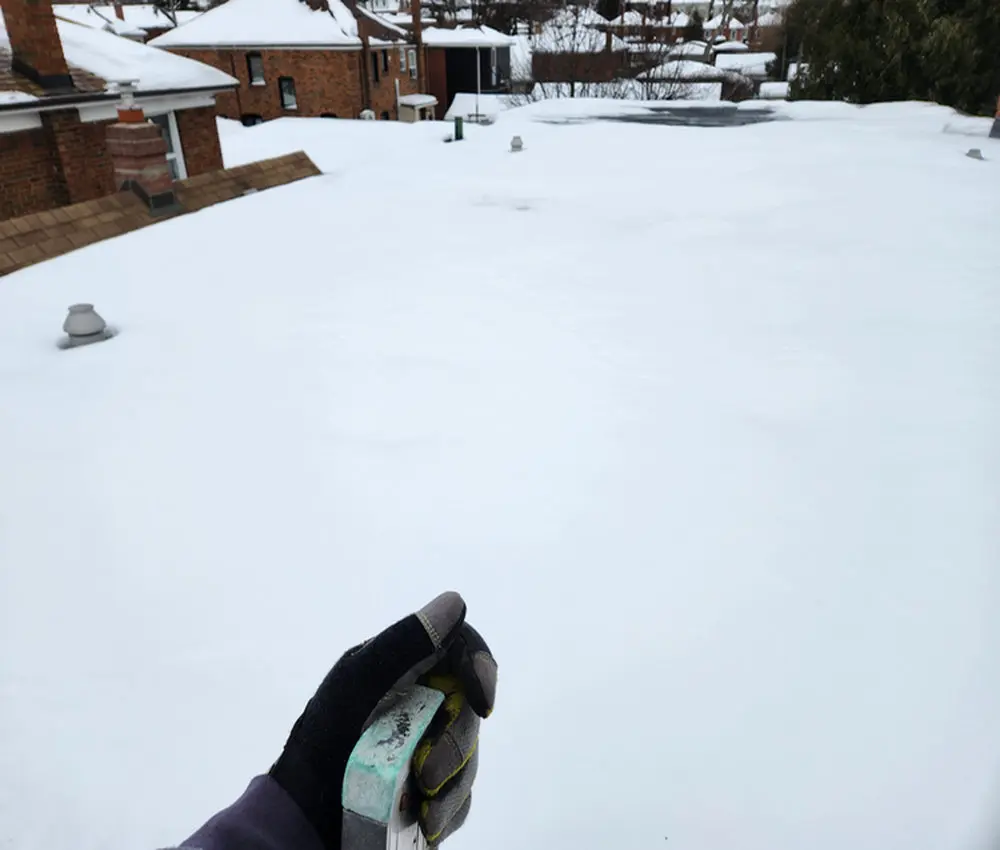
Snow accumulation is the big one. Wet, heavy snow can pile up fast, and flat roofs don’t shed it naturally. We’ve seen flat roofs holding several feet of snow, creating dangerous weight loads that the structure wasn’t designed to handle long-term.
Then there’s the drainage issue. Flat roofs rely on drains and scuppers to move water off the surface. In winter, these can freeze or get blocked by ice and snow. Water backs up, freezes, expands, and finds weak spots in your roofing membrane.
Flat roofs also develop problems around seams and penetrations faster in winter. The constant freeze-thaw cycle makes materials expand and contract, which can open up gaps in even well-maintained roofs.
When to Remove Snow from Your Flat Roof
Property owners with flat roofs should consider professional snow removal when:
- Snow depth exceeds 12 inches
- You’re dealing with heavy, wet snow
- Ice is building up around drains
- You notice sagging or stress in the roof structure
- Another storm is forecast before current snow can melt
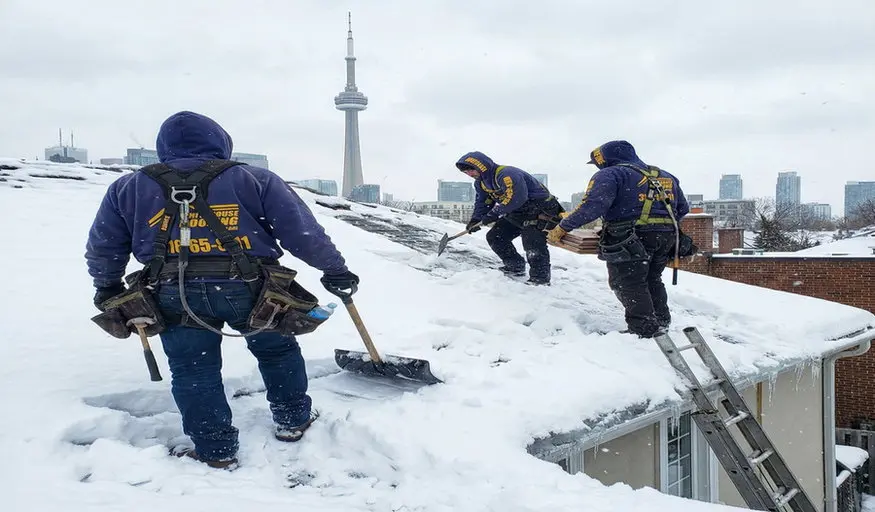
Don’t try to remove snow from your flat roof yourself. It’s dangerous, and you can easily damage the roofing membrane with shovels or improper tools. Professional services have the right equipment and know how to clear snow without causing damage.
Emergency Leak Repairs: What to Do When Disaster Strikes
Winter roof leaks always seem to happen at the worst possible time—during a blizzard, on a holiday weekend, in the middle of the night. When water starts coming through your ceiling, you need to act fast.
Immediate Steps When You Discover a Leak
First, protect your interior. Move furniture and valuables away from the leak. Put down buckets or containers to catch water. If water is pooling on your ceiling and bulging, carefully puncture it to drain (otherwise the weight can cause ceiling collapse).
If it’s safe and you can access your attic, try to trace where water is entering. Place buckets under the source if possible. Keep in mind that water doesn’t always drip straight down—it can travel along rafters and beams before showing up inside your home.
Don’t attempt to go on your roof during a storm or in icy conditions. It’s incredibly dangerous and can wait until conditions improve or professionals arrive.
Temporary vs Permanent Fixes
When we respond to winter emergency calls, sometimes we can only do temporary repairs until weather permits proper work. That’s normal. A temporary patch or tarp can stop immediate water intrusion and prevent further damage until we can do permanent repairs.
Temporary repairs might include:
- Emergency tarping over damaged areas
- Quick patching of obvious holes or gaps
- Temporary flashing repairs
- Ice dam removal to stop water backup
Permanent repairs come later when temperatures allow proper installation of materials. Don’t skip the permanent fix just because the temporary patch seems to be holding. Winter will test every weak spot repeatedly.
Prevention: Your Best Defense Against Winter Roof Problems
Most winter roofing emergencies are preventable with proper preparation. The work you do in fall can save you from disaster in January.
Fall Roof Inspection
Before winter hits, have your roof professionally inspected. A good inspection catches small problems before winter turns them into big ones. We look for:
- Loose, cracked, or missing shingles
- Worn flashing around chimneys, vents, and roof valleys
- Damaged or clogged gutters
- Signs of poor attic ventilation
- Existing minor leaks or weak spots
- Proper roof drainage
Repairs done in October are way easier and cheaper than emergency repairs in February.
Attic Insulation and Ventilation
Here’s something many homeowners miss: your attic plays a huge role in preventing winter roof problems, especially ice dams.
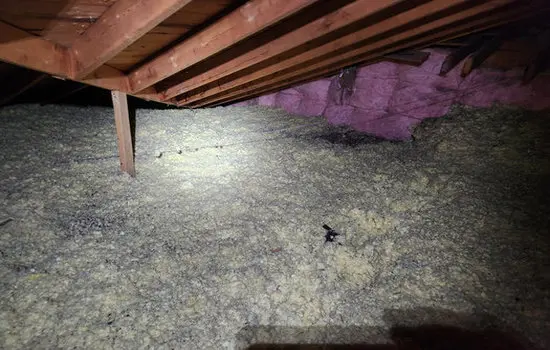
Proper attic insulation keeps heat inside your living space instead of letting it escape through the roof. When less heat reaches your roof deck, snow melts slower and more evenly, reducing ice dam formation.
Ventilation is equally important. Your attic needs to breathe—cold air in through soffit vents, warm air out through ridge or gable vents. This keeps the attic temperature closer to outside temperature, which again helps prevent uneven melting and ice dams.
If you’re getting recurring ice dams, the problem often isn’t your roof—it’s inadequate insulation or ventilation.
Gutter Maintenance
Clean gutters before winter arrives. Clogged gutters can’t drain properly, which contributes to ice dam formation. They also add weight when filled with ice and can pull away from your fascia boards.
Consider installing gutter guards if you have a lot of trees near your home. They’re not perfect, but they reduce debris buildup significantly.
Snow and Ice Removal: When and How
Not every roof needs snow removal after every storm, but knowing when it’s necessary can prevent structural problems and leaks.
Snow Load Limits
Most Toronto residential roofs are built to handle typical snow loads, but “typical” doesn’t cover every situation. Heavy, wet snow weighs significantly more than light, fluffy snow. Multiple storms without melting periods create cumulative loads that add up fast.
Watch for these warning signs that your roof might be overloaded:
- Doors that suddenly stick or won’t close properly
- New cracks appearing in interior walls or ceilings
- Visible sagging in the roofline
- Creaking or popping sounds from the roof structure
- Difficulty opening or closing windows
If you notice any of these, call a professional immediately. Don’t wait for additional snow.
Professional vs DIY Snow Removal
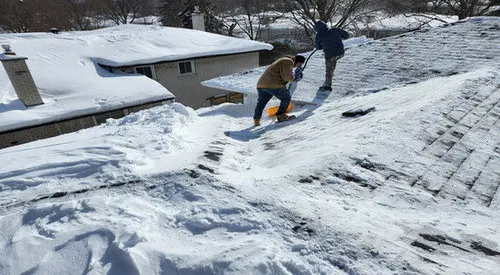
We strongly recommend professional snow removal for several reasons. First, it’s dangerous. Roofs are slippery in winter, and falls cause serious injuries or death every year. Second, improper removal damages roofing materials. Metal shovels scrape off shingle granules. Chipping at ice can puncture your roof.
Professionals use proper equipment—roof rakes for ground-level removal, plastic shovels that won’t damage materials, and techniques that protect your roof while clearing snow safely.
If you insist on doing it yourself, use only proper roof rakes from the ground. Never use sharp tools or salt/chemicals on your roof.
The Real Cost of Ignoring Winter Roof Problems
Let’s talk money for a minute, because that’s often what motivates action.
A small roof repair in fall might cost a few hundred dollars. That same problem, left to worsen over winter, can turn into thousands in emergency repairs plus interior water damage restoration. We’ve seen scenarios where ignoring a $500 issue led to $15,000+ in total repairs.
Water damage is particularly expensive because it’s not just about fixing the roof. You’re looking at:
- Drywall replacement
- Insulation replacement
- Paint and refinishing
- Potential mold remediation
- Damaged flooring or carpets
- Ruined furniture or belongings
Insurance might cover some of this, but not if the damage resulted from neglected maintenance. Insurance companies don’t pay for damage that could have been prevented with reasonable care.
Beyond money, there’s the disruption to your life. Emergency repairs in winter mean contractors in your home, furniture moved, living spaces out of commission, and the stress of dealing with unexpected problems.
Prevention isn’t just cheaper—it’s way less stressful.
Why Professional Help Matters
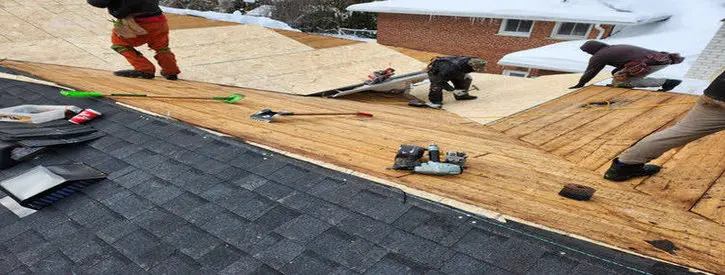
We get it—roofing companies aren’t cheap, and it’s tempting to handle things yourself or wait and hope problems resolve on their own. But winter roofing really isn’t a DIY situation for most homeowners.
Professional roofers bring expertise that prevents costly mistakes.
We know which repairs can wait and which need immediate attention. Trust that we have the safety equipment to work on roofs in difficult conditions. We understand building codes and proper installation techniques.
Most importantly, we spot problems you might miss. A damaged roof doesn’t always announce itself with obvious leaks. We catch things like improperly installed flashing, ventilation issues, or structural concerns that could become serious problems down the line.
When you’re choosing a roofing contractor for winter work, look for:
- Companies that work year-round (some companies shut down in winter)
- Proper licensing and insurance
- Good reviews and local reputation
- Emergency service availability
- Clear communication and transparent pricing
Don’t go with the cheapest quote without understanding why it’s cheap. Quality materials and experienced crews cost more for a reason.
What Right Choice Roofing Offers Toronto Homeowners
We’ve been dealing with Toronto winters long enough to know what works and what doesn’t. Our team stays busy all winter because roof problems don’t take a break just because it’s cold outside.
We handle everything winter throws at your roof:
Emergency Repairs – We respond quickly when you’ve got water coming in and need help now. Our emergency service means you’re not waiting days while damage gets worse.
Ice Dam Removal – We safely remove ice dams and address the underlying causes so they don’t keep coming back year after year.
Storm Damage Assessment and Repair – After major storms, we provide thorough inspections and complete repairs to restore your roof’s integrity.
Snow Removal Services – For flat roofs or situations where snow load is becoming dangerous, we provide safe, professional removal.
Flat Roof Leak Repair – We specialize in flat roof systems and understand their unique winter challenges.
What sets us apart is straightforward communication. We don’t oversell services you don’t need, and we don’t hide problems that actually require attention. You get honest assessments and clear explanations of what’s happening with your roof.
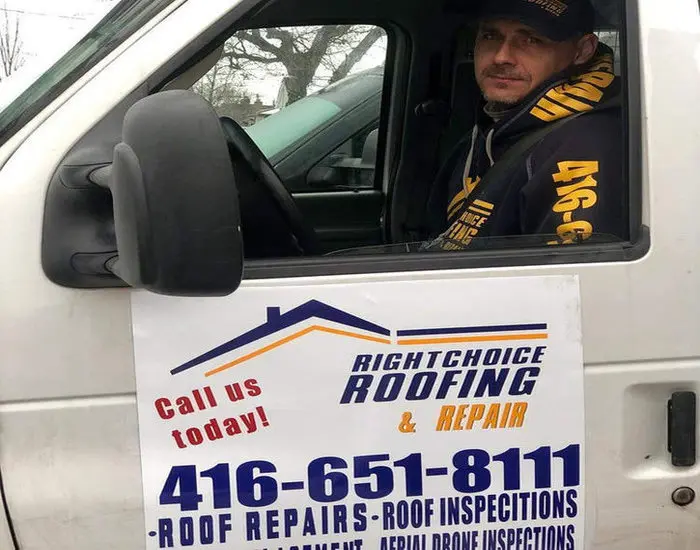
Take Action Before Problems Get Worse
Winter roof problems share one common trait: they get worse with time, never better. That small leak isn’t going to seal itself up. Ice dams grow larger, not smaller. Storm damage creates entry points for more damage in the next storm.
If you’re seeing warning signs—water stains, ice buildup, missing shingles, sagging, or anything else that concerns you—don’t wait. The longer you delay, the more expensive and complicated repairs become.
Even if you’re not sure whether you have a problem, it’s worth getting a professional opinion. A quick inspection might give you peace of mind, or it might catch something before it becomes an emergency.
We serve Toronto and the surrounding GTA all winter long. Our crews are equipped to handle cold weather repairs, and we respond quickly to emergency situations.
Your roof protects everything inside your home—your family, your belongings, your investment. Don’t let winter damage compromise that protection.
Give Right Choice Roofing and Repair a call. We’ll come take a look, give you straight answers about what we find, and provide clear options for addressing any issues.
Because the best time to fix a roof problem is always before it becomes a disaster.
Contact Right Choice Roofing and Repair
📞 Phone: 4166518111
📍 Serving Toronto and the Greater Toronto Area
Winter Services Available:
- Emergency Roof Repairs
- Ice Dam Removal
- Storm Damage Repair
- Snow Removal (Flat Roofs)
- Leak Detection and Repair
- Winter Roof Inspections
Don’t wait for small problems to become big emergencies. Contact us today.
Right Choice Roofing and Repair – Your trusted Toronto roofing specialists for all seasons.
Frequently Asked Questions About Winter Roofing In Toronto
Most residential roofs in Toronto are built to handle around 20-30 pounds per square foot, but it depends on whether you’re dealing with light, fluffy snow or heavy, wet snow. As a general rule, if you’ve got more than 12 inches of heavy, wet snow accumulated, or if you notice warning signs like doors sticking, cracks in walls, or sagging in your roofline, it’s time to call for professional snow removal. Flat roofs are particularly vulnerable and should be monitored more closely after heavy snowfall.
Yes, roof repairs can absolutely be done in winter—we do them all the time. While some repairs work better in warmer weather, emergency repairs can’t wait, and experienced roofers know how to work safely and effectively in cold conditions. We use cold-weather materials and techniques designed for winter installation. That said, sometimes we’ll do a temporary repair to stop immediate damage and then schedule permanent work for better weather. Don’t let a leak continue all winter just because you think repairs aren’t possible.
Not necessarily. A few small icicles are pretty normal in winter and don’t automatically mean trouble. However, if you’re seeing large icicles, thick ridges of ice along your roof edge, or ice formations that seem to be growing, that’s a sign ice dams are forming. The real red flags are water stains on your ceilings near exterior walls, sagging gutters from ice weight, or visible water backing up under your shingles. If you’re unsure, it’s worth having someone take a look—ice dam damage happens fast once water starts getting under your shingles.
Ice dams happen when heat escapes from your home into the attic, warming the roof and melting snow unevenly. The melted water runs down and refreezes at the colder roof edges, creating a dam. Prevention focuses on three things: proper attic insulation (to keep heat in your living space), good attic ventilation (to keep the attic temperature closer to outside temperature), and keeping gutters clean so water can drain properly. If you’re getting ice dams every winter, the problem usually isn’t your roof itself—it’s inadequate insulation or ventilation underneath it.
Call immediately. Winter roof leaks don’t get better on their own—they get worse with every freeze-thaw cycle and every new snowfall. While you’re waiting for help to arrive, protect your interior by moving valuables, placing buckets to catch water, and if safe, putting containers in your attic under the leak source. Don’t try to go on your roof yourself in winter conditions—it’s dangerous and can wait for professionals. Most reputable roofing companies offer emergency services specifically because we know winter leaks can’t wait until Monday morning.