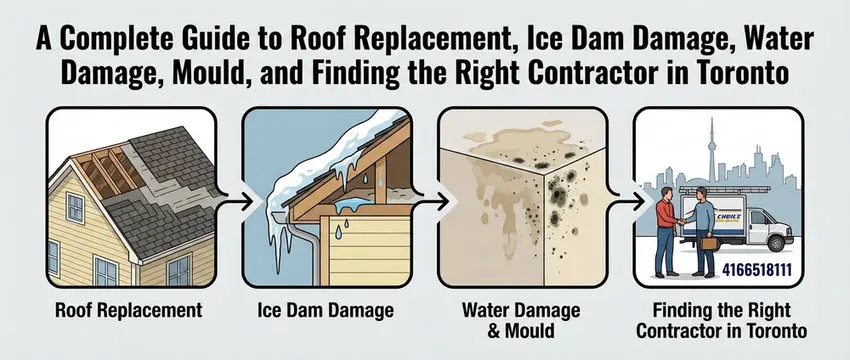
A Complete Guide to Roof Replacement, Ice Dam Damage, Water Damage, Mould, and Finding the Right Contractor in Toronto
It started with a small water stain on the living room ceiling. Sandra, a homeowner in Toronto’s East End, told herself it was probably nothing — maybe some condensation, maybe a one-time thing. She’d deal with it in the spring. By the time spring arrived, her attic insulation was completely saturated, her drywall was crumbling, black mould had spread along three walls, and her basement had flooded twice. What began as a $12,000 roof replacement turned into a $50,000 nightmare that included structural repairs, full mould remediation, and two weeks in a hotel.
Sandra’s story isn’t rare. Across Toronto, we see it every single winter — homeowners who ignore the early warning signs and end up paying three, four, or five times more than they would have if they’d acted sooner. Whether you’re dealing with roof leak issues, ice dam damage, flat roof failures, or just an aging shingle roof that’s quietly giving out, this guide is designed to give you the full picture: what’s happening to your roof, what it will cost, what the risks are if you wait, and exactly what to look for when choosing someone to fix it.
At Right Choice Roofing and Repair, we’ve been serving Toronto homeowners and business owners since 2007. We’ve seen every type of roof damage imaginable — and we’ve helped thousands of families navigate the process from first inspection to final shingle. This is the guide we wish every one of our customers had read before things got out of hand.
Why Toronto Winters Are So Brutal on Your Roof
Toronto winters are punishing, and your roof takes the worst of it. Between December and March, a typical Toronto home is subjected to repeated freeze-thaw cycles — days where temperatures climb above freezing, melt the snow sitting on your roof, and then plunge back overnight, turning that meltwater into ice. This cycle, repeated dozens of times in a single season, is one of the most destructive forces your roof will ever face.
Toronto also receives significant snowfall, often in heavy, wet dumps that place enormous weight on roof structures — particularly older homes and flat-roofed buildings. The combination of heavy snow loads, freeze-thaw cycles, and the prevalence of older homes with aging insulation and ventilation systems makes the Greater Toronto Area one of the most challenging environments for roofing in all of Canada.
The result? Ice dams, roof leaks, mould, ceiling damage, and in the worst cases, partial structural collapse. And because so much of this damage develops slowly and out of sight — inside attic spaces, behind walls, under membranes — many homeowners don’t realize how bad things have gotten until the damage is already extensive.
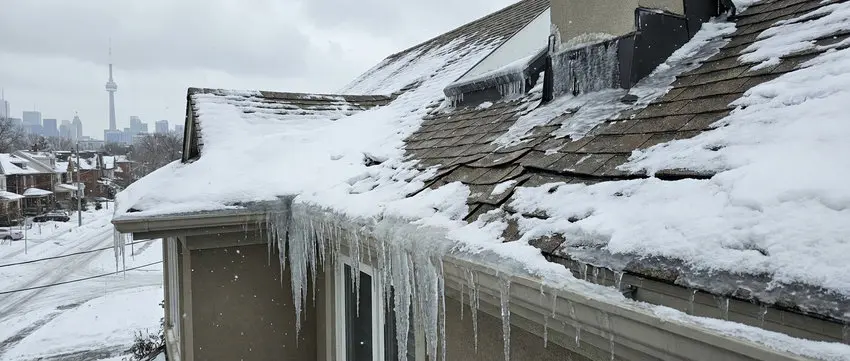
If you’ve ever noticed thick icicles hanging from your gutters or a ridge of ice building up along the edge of your roof, you’re looking at an ice dam in progress — and it should concern you far more than it probably does.
Ice dams form when warm air escapes from inside your home, rises into the attic, and heats the underside of your roof. This warmth melts the snow sitting on the upper sections of your roof. That meltwater flows down toward the eaves — but the eaves are colder because they’re not directly above the warm attic space. When the water hits that colder edge, it refreezes, creating a thick wall of ice. More meltwater piles up behind that wall with nowhere to go, and eventually it begins forcing its way under your shingles and into your home.
The damage this causes is wide-ranging and often hidden. Water that enters under the shingles can travel along rafters and attic joists, surfacing as a stain on a ceiling far from where the actual leak is located. Saturated attic insulation loses all of its effectiveness. Wood decking begins to rot. Walls develop mould. And in severe cases — particularly in homes with older or structurally compromised roofing — the weight of ice dams can cause gutters to pull completely away from the fascia, and in extreme situations, roofing materials to fail entirely.
Warning signs that you may already have ice dam damage:
- Water stains appearing on your ceiling or walls during winter — even when it isn’t raining
- Icicles forming along roof edges or gutters, particularly large or recurring ones
- Gutters pulling away from the fascia or becoming visibly misaligned
- Musty odours in your attic, upper floors, or inside closets on exterior walls
- Peeling paint or wallpaper near the tops of interior walls
- Water pooling near the base of your exterior walls after a thaw
- Visible mould or discolouration on attic insulation or wood
The root causes of ice dams are almost always inadequate attic insulation, poor attic ventilation, or a combination of both. The Ontario Building Code recommends attic insulation values of R-50 or higher for most residential applications. Many older Toronto homes — particularly those built before the 1990s — fall well short of this standard, making them significantly more vulnerable. Addressing the insulation and ventilation is not just about stopping ice dams; it’s about making your home dramatically more energy efficient in the process.
Professional ice dam removal in Toronto typically costs between $300 and $1,500, with steam removal being the gold standard — it melts ice efficiently without the risk of damaging shingles the way chipping and salt products can. That cost is nothing compared to the water damage repair and mould remediation bills that follow if ice dams are left unchecked. Insurance claims related to ice dam damage in Toronto have ranged from a few thousand dollars for minor interior repairs to over $50,000 for cases involving roof replacement, structural repairs, and mould remediation combined.
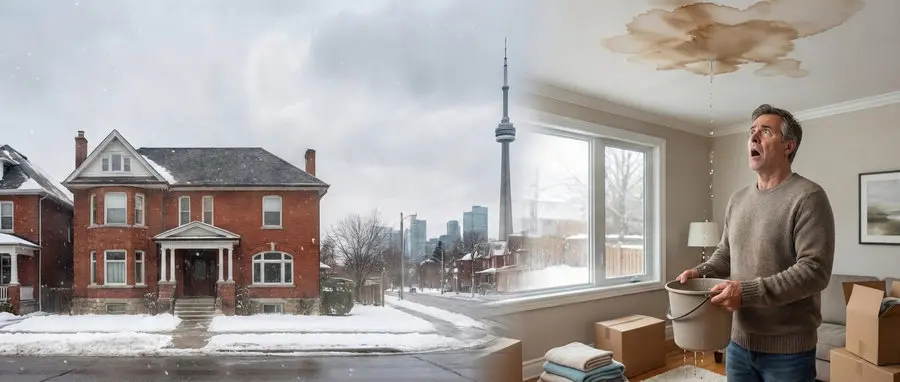
A roof leak is almost never just a roof leak. By the time you notice water coming through your ceiling, the damage has usually been building for months — sometimes years. Moisture works silently, soaking into insulation, rotting wood, and creating the dark, damp conditions that mould needs to thrive. What looks like a small stain above your light fixture could represent thousands of dollars in hidden structural damage.
In Toronto, the most common culprits behind roof leaks are failed flashing around chimneys, skylights, and vents; cracked, curling, or missing shingles; deteriorated underlayment; and ice dam damage. On flat roofs, the failure points are usually seam separations, membrane punctures, or improper drainage that allows water to pond on the surface until it eventually finds a way through.
When leaks go unaddressed, the cascade of consequences is predictable and expensive. Water soaks into attic insulation, destroying its R-value and leading to dramatically higher heating bills. It travels down interior wall cavities, surfacing on your drywall or behind baseboards. Wooden structural members — rafters, joists, decking — begin to rot, eventually compromising the structural integrity of the roof system itself. And perhaps most alarmingly, it creates the perfect environment for mould, which can become a serious health hazard and requires costly professional remediation to properly address.
Severe Water Damage, Basement Flooding, Mould, and Ceiling Collapse
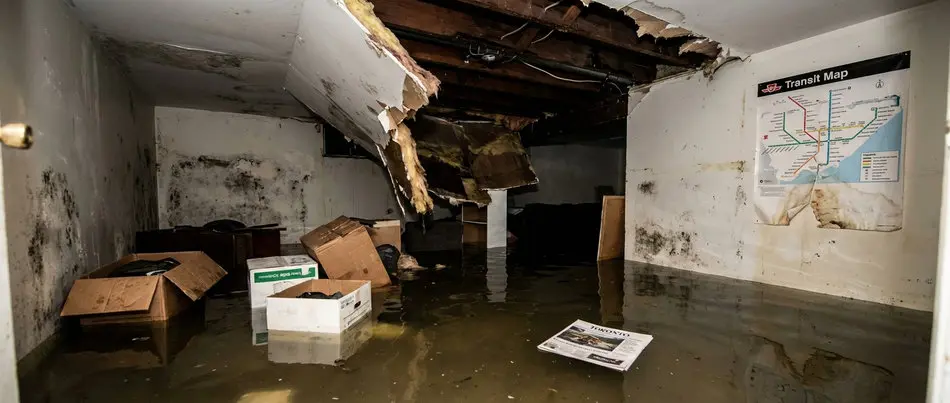
Once a roof is leaking consistently, the water doesn’t stay in the attic. Over time, it saturates ceiling drywall until that ceiling begins to sag and eventually fail. Ceiling collapse — which sounds dramatic but is genuinely common in homes with long-standing, unaddressed leaks — creates not only a major repair bill but a genuine safety hazard for anyone in the room below.
In multi-storey homes, roof leaks can eventually make their way all the way to the basement, contributing to flooding that most homeowners would never think to connect back to a roofing problem. We’ve seen this many times: a homeowner calls us about a recurring basement flooding issue, and after investigation, the water trail leads all the way up through the walls to a compromised area on the roof.
Mould is perhaps the most serious consequence of prolonged roof leaks. Toronto homes that are sealed tight for winter create the perfect indoor conditions for mould to proliferate once moisture gets into wall cavities and ceiling spaces. Mould remediation in Ontario is not a DIY project — certified professionals are required, the affected areas need to be contained and stripped, and the remediation process can cost anywhere from $3,000 to $25,000 depending on the extent of the contamination. And beyond the cost, mould presents real health risks: respiratory issues, allergic reactions, and immune system impacts are all documented consequences of mould exposure, particularly for children and elderly residents.
The bottom line: a roof repair that costs $500 to $2,000 today can prevent $10,000 to $50,000 in damage down the road. Every week of delay is a week of moisture doing invisible damage inside your home.
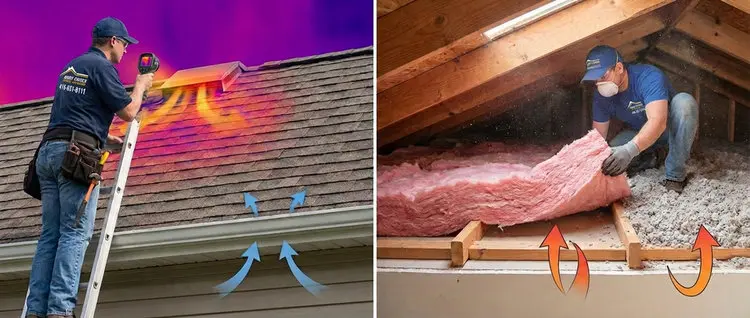
Ask most homeowners about their attic ventilation and you’ll get a blank stare. Yet ventilation is one of the most critical factors in the longevity of any roofing system — and one of the most commonly skipped steps when a roof is installed by a contractor cutting corners.
A properly ventilated attic maintains consistent temperature year-round. In winter, this means the roof stays cold and even, preventing the uneven snowmelt that creates ice dams. In summer, it means hot air escapes rather than baking your shingles from below — which dramatically extends the life of your roofing materials. The standard approach involves soffit vents at the eaves (intake) working in balance with ridge vents or high attic exhaust vents at the peak. When that airflow is compromised — by blocked soffits, improperly installed insulation, or missing vents entirely — the entire system suffers.
A thorough ventilation inspection should be part of every roof replacement project and every pre-winter maintenance check. It evaluates intake and exhaust vent capacity, looks for obstructions or damage, and assesses attic airflow patterns. Similarly, ceiling insulation inspection often reveals problems that directly affect roof performance — compressed insulation that’s lost its R-value, insulation that has been pushed aside over time to block soffit ventilation, or insulation that has been saturated by a previous leak and never replaced.
When we complete a roof replacement at Right Choice Roofing and Repair, we always assess the ventilation situation before the new roof goes on. A brand new roof over a poorly ventilated attic will age prematurely and fail sooner than it should — and that kind of installation issue can void your material warranty.
Understanding Your Options: Roof Types, Materials, and What They Cost in Toronto
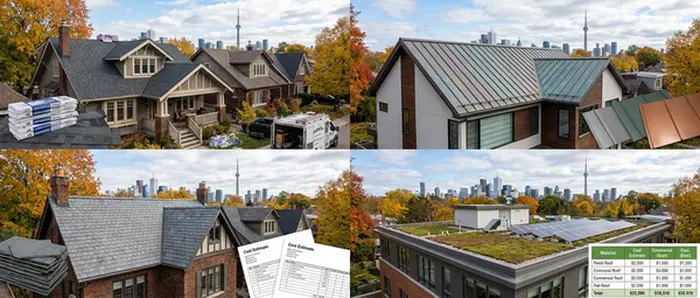
One of the most common questions we get is: “How much is a new roof going to cost me?” The honest answer is that it depends significantly on what kind of roof you have, what material you choose, and the condition of the underlying structure. Here’s a breakdown of the main options Toronto homeowners and business owners are working with.
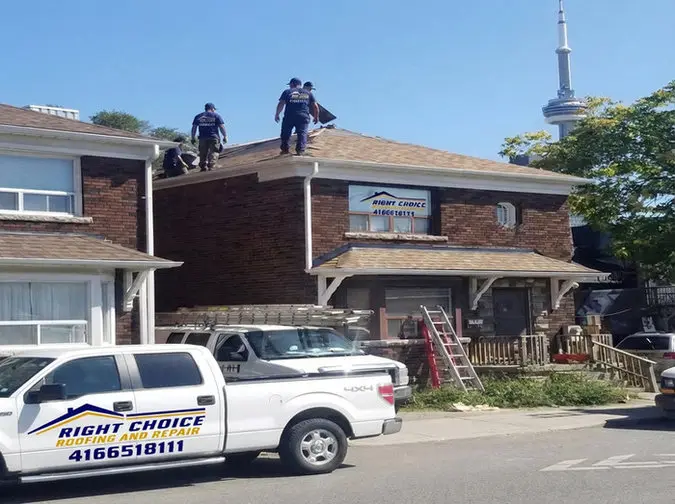
Asphalt shingles remain the most popular roofing choice in Toronto for good reason: they’re cost-effective, widely available, and when properly installed, they perform reliably through the freeze-thaw cycles that define our winters. In 2025, you can expect to pay between $3.50 and $7.50 per square foot for asphalt shingle replacement, with total project costs typically falling between $7,000 and $20,000 for an average-sized Toronto home. That range reflects the significant variation in shingle quality — basic 3-tab shingles are cheaper upfront but rarely last more than 15 to 20 years, while premium architectural or impact-resistant shingles carry a higher price tag but a significantly longer lifespan and better performance in harsh weather.
Material prices have risen 10 to 15% over recent years due to supply chain pressures and inflation, so if you’ve been putting off a shingle replacement based on a quote from a few years ago, it’s worth getting a fresh estimate. Labour typically accounts for 50 to 60% of the total project cost in Toronto, which is why the contractor you choose matters as much as the materials they install.
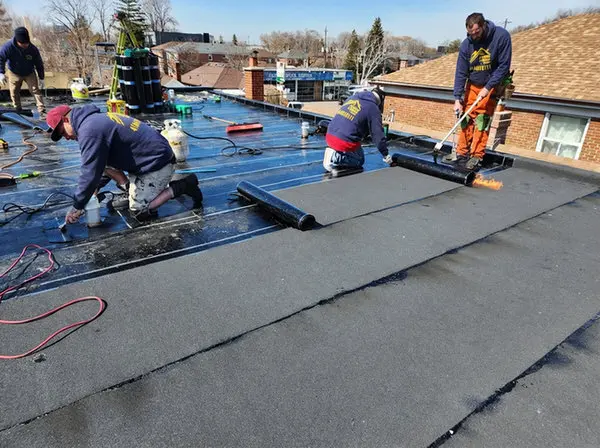
Flat roofs are extremely common in Toronto — particularly on commercial buildings, row houses, garages, and many mid-century residential properties. They require specialized knowledge, materials, and drainage design that are quite different from sloped roofing systems. And while they can be highly effective when done properly, they are also uniquely vulnerable to Toronto’s freeze-thaw cycles if installed or maintained incorrectly.
The three most common flat roofing systems in use in Toronto today are EPDM (rubber membrane), TPO (thermoplastic polyolefin), and modified bitumen. EPDM is a durable, flexible rubber membrane that stays pliable even in extreme cold — making it well-suited to Toronto winters — and runs approximately $7 to $11 per square foot installed. TPO is a popular white membrane that reflects heat effectively and offers excellent energy efficiency; heat-welded seams make it very watertight when installed correctly, but seam failures are a real risk with poor workmanship, and costs run $8 to $12 per square foot. Modified bitumen is a traditional tar-based system that has been updated with modern polymer modifications; it’s reliable and cost-effective but requires regular inspection.
For a standard 1,000 square foot flat roof in Toronto, total replacement costs in 2025 typically range from $11,000 to $16,000 depending on materials and project complexity. One important note: surface inspections often miss moisture damage, deteriorated insulation, and substrate problems that only become visible during tear-off. This is why flat roofs should always be assessed with a thorough inspection before a replacement quote is finalized. Discovering hidden damage mid-project leads to budget surprises nobody wants.
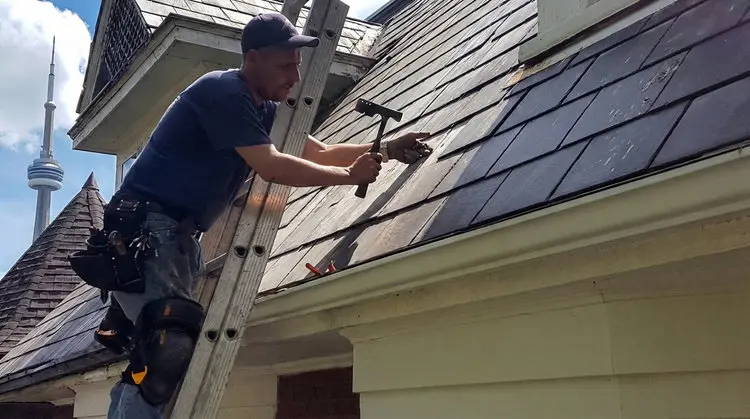
Toronto has a remarkable inventory of heritage homes — particularly in neighbourhoods like Rosedale, Forest Hill, the Annex, Cabbagetown, and Riverdale — many of which feature original or period-appropriate slate roofing. Slate is extraordinary in its durability and beauty; a properly maintained slate roof can genuinely last 75 to 100 years or more, making it the longest-lived roofing material available. But it is also among the most expensive and technically demanding to work with.
Slate roof replacement in Toronto currently runs $20 to $42 or more per square foot, reflecting the high cost of the material itself, the specialized installation expertise required, and in many cases, the need for structural reinforcement to support slate’s significant weight. Very few roofing contractors have genuine slate experience — it’s a specialized trade that requires understanding of mortar, flashing, and nail patterns that are completely different from shingle installation. Hiring an unqualified contractor for a slate project is one of the most costly mistakes a heritage homeowner can make.
When individual slates crack or slip, they can often be replaced individually — extending the life of the overall roof system significantly at much lower cost than a full replacement. If you have a slate roof that has been quoted as needing full replacement, it’s always worth getting a second opinion from a contractor with genuine slate expertise. At Right Choice Roofing and Repair, slate is one of our specialties, and we’ve saved many homeowners tens of thousands of dollars by performing targeted repairs on roofs that other contractors had written off.

Dealing with your insurance company after roof damage is one of the most stressful parts of the whole experience — and it’s an area where many homeowners unknowingly give up money they’re entitled to, or inadvertently make mistakes that reduce their coverage.
Most homeowner’s insurance policies in Ontario will cover sudden, accidental roof damage — from storms, falling trees, ice damage, and similar events. What they typically do not cover is gradual deterioration resulting from poor maintenance, damage from pre-existing conditions, or situations where inspections would have identified the problem before it became serious. This distinction matters enormously, because it means that a homeowner who has been ignoring a leaking roof for years may find their claim denied, while a homeowner who acted promptly and documents everything carefully is much more likely to receive full coverage.
If you’re filing a roof-related insurance claim, here’s what we recommend:
- Document everything before any temporary repairs are made — photographs and video of all visible damage, interior and exterior
- Do not allow any non-emergency permanent work to be done until your adjuster has inspected
- Keep every receipt for emergency services, tarping, or temporary repairs — these are usually covered
- Be present during the adjuster’s inspection and point out every area of concern
- Get an independent contractor assessment so you have expert documentation of the full scope of damage
- Understand your policy’s depreciation provisions — some policies pay actual cash value rather than replacement cost, which can significantly affect your payout
- Ask about ice dam coverage specifically — some policies limit or exclude it, and you need to know where you stand before filing
If your claim is denied, don’t simply accept that decision. You have the right to dispute the finding, and having a licensed contractor’s detailed written assessment can be invaluable in that process.
If there’s one section of this guide that could save you the most money, this is it. Toronto’s roofing industry has its share of highly skilled, honest professionals — and its share of contractors who will take your deposit and disappear, or complete a job so poorly it fails within a few years. Knowing how to tell the difference before you sign anything is essential.
What to look for in a legitimate Toronto roofing contractor:
- Verifiable local presence and established history — a company that has been operating in Toronto for years, with a real address and a track record you can research
- Proper licensing and insurance — specifically WSIB (Workplace Safety and Insurance Board) coverage for workers and comprehensive general liability insurance of at least $2 million. Ask for proof of both before work begins
- A BBB rating or accreditation, TrustedPros reviews, or Google reviews with a strong average across many verified reviews — not just a handful
- A written, detailed contract that specifies materials by brand and grade, scope of work, timeline, payment schedule, and warranty terms
- A minimum two-year workmanship warranty on repairs and a meaningful warranty on replacements — companies that won’t stand behind their work are telling you something important
- Manufacturer certifications for the products they install — these often unlock extended material warranties that non-certified contractors cannot provide
- Transparency about what your project actually needs — a trustworthy contractor will tell you when a repair is sufficient rather than pushing an unnecessary replacement
Red flags that should make you walk away:
- Door-to-door solicitation after a storm — legitimate contractors don’t need to chase homeowners
- Requests for large deposits or full payment upfront before any work begins
- Verbal estimates with no written contract
- Pressure to sign immediately or claims that a “special price” is only available today
- No verifiable business address or inability to provide proof of insurance on request
- Unusually low bids — if a quote is dramatically lower than the others you’ve received, something is being left out or compromised
Always get at least three written estimates from established contractors, and make sure each estimate is specific enough that you can compare them directly. A vague estimate that simply says “replace roof” is not a document you can rely on — a proper estimate should specify materials, quantities, labour scope, what is and isn’t included, and what happens if hidden damage is discovered during tear-off.
When to Replace: Timing, Seasonal Considerations, and Why Waiting Is Rarely Worth It
Spring and fall are genuinely the ideal times for roof replacement in Toronto. Temperatures are moderate, there’s less risk of weather delays, and roofing materials perform at their best during installation when they’re not being subjected to extreme heat or cold. Summer can work but comes with heat-related challenges and higher contractor demand — meaning longer waits and potentially higher prices. Winter roof replacement is typically reserved for emergency situations; it’s more expensive, more challenging, and some materials don’t install as reliably in cold conditions.
That said, the best time to replace your roof is when it needs replacing — not when the calendar is most convenient. A roof that’s actively leaking or has sustained ice dam damage doesn’t get better with time; it gets worse. Every additional month of delay is a month of expanding water damage, deteriorating insulation, and potentially spreading mould.
If your roof is approaching 20 to 25 years old and hasn’t been replaced, it’s worth scheduling an inspection now — not after it starts causing problems. Proactive replacement on your terms is almost always less expensive and less disruptive than emergency replacement driven by acute damage.
Preparing for a Roof Replacement: What to Expect
A lot of homeowners are nervous about roof replacement — the disruption, the noise, the presence of workers on their property. In reality, a professional crew will complete most residential shingle replacements in one to three days, flat roofs in a similar timeframe, and slate work in two to four weeks depending on scope. Here’s how to set yourself up for a smooth experience:
- Clear your driveway and the area immediately around your home — materials will be delivered and dumpsters placed
- Move vehicles away from the house and ideally out of the driveway on work days
- Let your neighbours know in advance — roofing work generates significant noise
- Secure fragile items in your attic if accessible — vibrations from the tear-off can shake things loose
- Cover pool or hot tub equipment near the home if debris could be an issue
- Ensure your contractor obtains any required City of Toronto building permits before work begins — this is their responsibility, but confirm it’s happening
A reputable contractor will include daily cleanup in their scope of work, protect your landscaping and property during the project, and ensure the site is properly secured each day before they leave. These aren’t extras — they’re standards of professional practice.
This isn’t just theory. The damage we’re describing in this guide has been headline news across Ontario over the past two years. Here are verified, real-world news stories and reports — with direct links — showing exactly what happens when roofs, ice, and extreme weather collide.

1. CBC News — "Roofers Warn of a 'Perfect Storm for Ice Damming' as Thaw Leads to Water Damage in Homes"
CBC News reported in February 2025 that roofers across southwestern Ontario were overwhelmed with calls as a prolonged cold winter suddenly gave way to a thaw — and ice dams began releasing water into homes everywhere.
Don't Wait Until It's a $50,000 Problem
Sandra eventually got her home repaired and her new roof installed. But looking back, she wishes more than anything that she had picked up the phone the moment she noticed that first ceiling stain. A $600 repair call that first fall could have prevented everything that followed.
Your roof is your home’s first and most important line of defence. It protects everything inside — your family, your furniture, your structure, your investment. When it starts showing signs of trouble, the worst thing you can do is hope the problem goes away on its own. It won’t.
The news stories above are real. The damage is real. And it’s happening to Toronto and Ontario homeowners every single winter and every major storm season. The difference between a homeowner who gets a $600 repair call and a homeowner who ends up with a $50,000 disaster is almost always the same thing: how quickly they acted.
At Right Choice Roofing and Repair, we’ve been helping Toronto homeowners and commercial property owners make the right call since 2007. Whether you need an emergency repair, an honest assessment of whether repair or replacement makes more sense, or a full roof replacement done properly and backed by a solid warranty — we’re here, we’re local, and we stand behind every project we complete.
How do I know if I need a full roof replacement or just a repair?
This is the number one question we get, and the honest answer is that it depends on a few key factors: the age of your roof, the extent of the damage, and how widespread the problem is. As a general rule, if your roof is under 15 years old and the damage is isolated to a specific area — a few missing shingles, a failed flashing around a chimney, a small flat roof blister — a targeted repair is almost always the smarter and more cost-effective choice. However, if your roof is 20 years or older, if you're experiencing leaks in multiple locations, if the decking underneath is rotting, or if you've already had the same area repaired more than once, you're likely throwing good money after bad. A full replacement becomes the better investment. The only way to know for certain is to have a qualified roofing contractor do a proper inspection — not just a quick look from the ground, but an actual hands-on assessment of the shingles, decking, flashing, and attic space below. At Right Choice Roofing and Repair, we give honest assessments. If a repair will genuinely solve your problem, we'll tell you that — even if a replacement would mean more money for us.
Does my home insurance cover ice dam damage and roof leaks in Toronto?
It depends on your specific policy, and the details matter enormously. Most standard homeowner's insurance policies in Ontario will cover sudden and accidental damage — meaning if an ice storm causes a tree to fall on your roof, or if a one-time severe weather event causes a leak, you're likely covered. Where homeowners run into trouble is when the damage is classified as the result of gradual deterioration or deferred maintenance. If an adjuster determines that your roof was already in poor condition before the damaging event, or that the problem had been developing over time without you addressing it, your claim can be reduced or denied entirely. Ice dam coverage specifically is an area where policies vary widely — some cover it, some exclude it, and some cover the interior water damage but not the roof repair itself. Before you have a problem, it's worth picking up the phone and asking your insurance broker exactly what your policy covers for ice dams, roof leaks, and storm damage. After a damaging event, document everything with photos and video before any work is done, save all receipts, and get a written contractor assessment to support your claim. If your claim is denied, you have the right to dispute it.
How long does a roof replacement take in Toronto, and will I be able to stay in my home?
In almost all cases, yes — you can absolutely stay in your home during a roof replacement. The work happens entirely on the exterior of your home, and while it does generate significant noise during the tear-off phase, it doesn't require you to vacate. For a standard residential asphalt shingle replacement on an average Toronto home, most professional crews will complete the job in one to three days. A flat roof replacement on a similar sized home typically takes a comparable amount of time. Slate work is more involved and can take two to four weeks depending on the scope. The things that most commonly extend timelines are unexpected structural damage discovered during tear-off — rotted decking, damaged rafters — and weather delays, which are always a factor in Toronto. A professional contractor will walk you through the project timeline before work begins and keep you updated if anything changes. The disruption is temporary. The peace of mind that comes with a properly installed new roof lasts for decades.
What is the best time of year to replace a roof in Toronto?
Spring and fall are ideal, and for good reasons beyond just temperature. In spring — typically late April through June — and fall — September through early November — the weather in Toronto is most cooperative, roofing materials install and seal most effectively, and contractor demand tends to be somewhat lower than the peak summer rush, which can translate into better scheduling and occasionally better pricing. Summer works fine too, though the heat makes it harder on crews and can occasionally affect how some materials are handled. Winter replacement is generally reserved for genuine emergencies — a roof that is actively failing and causing interior damage can't wait until spring, and reputable contractors will mobilize for those situations. What we always tell homeowners is this: the best time to replace your roof is before it becomes urgent. Once you're in emergency territory, your options narrow, your leverage decreases, and the chance of additional damage accumulating in the meantime increases significantly. If your roof is aging or showing warning signs, getting it replaced during ideal conditions — on your schedule, not the weather's — is always the better outcome.
How do I protect my roof from ice dams and winter damage going forward after it's replaced?
A new roof goes a long way, but the most important things you can do to prevent ice dams and winter damage are actually about what's happening underneath the roof — specifically your attic insulation and ventilation. When we replace a roof at Right Choice Roofing and Repair, we always assess both before the new materials go on. Ensuring your attic has insulation up to the Ontario Building Code standard of R-50 or higher keeps warm air from escaping through your roof surface and triggering the uneven snowmelt that creates ice dams. Proper ventilation — balanced intake through soffit vents and exhaust through ridge or attic vents — keeps roof temperatures consistent through freeze-thaw cycles. Beyond that, there are practical seasonal steps every homeowner should take: clean your gutters every fall so water can drain freely, use a roof rake to clear snow accumulation after heavy snowfalls before it has a chance to melt and refreeze, and have your roof professionally inspected at least once a year — ideally in late fall before winter hits. Heating cables installed along the eaves can help in areas that are particularly prone to ice buildup, especially on lower-slope sections or spots with known shading issues. The single most effective thing you can do is be proactive. A $200 inspection every fall is the best insurance policy you can buy against a $20,000 repair bill in the spring.
Right Choice Roofing and Repair | Toronto, Ontario | Established 2007 Residential & Commercial Roofing | Slate Roofing | Flat Roofs | Emergency Repairs | Ice Dam Removal | Snow Removal | Roof Inspections | Wildlife Damage Repair rightchoiceroofing.ca