Toronto Roofing scams alert – A roof leak does not wait. It shows up during a rainstorm, at two in the morning, and the first thing most people do is grab a phone and start calling roofers. That is the exact moment Toronto Roofing scams happen. That is also the moment overpriced, unfair contracts get signed at kitchen tables.
Here is the part most Toronto homeowners do not realize — the Province of Ontario has already built a comprehensive, legal framework specifically to protect you. It covers Roofing Scams, unsafe job sites, fraudulent deposits, and contracts that are designed to fall apart in court. All of this protection sits on a single page at Ontario.ca: Hiring a roofer, with a related guide at Your rights when starting home renovations or repairs. Almost nobody reads them.
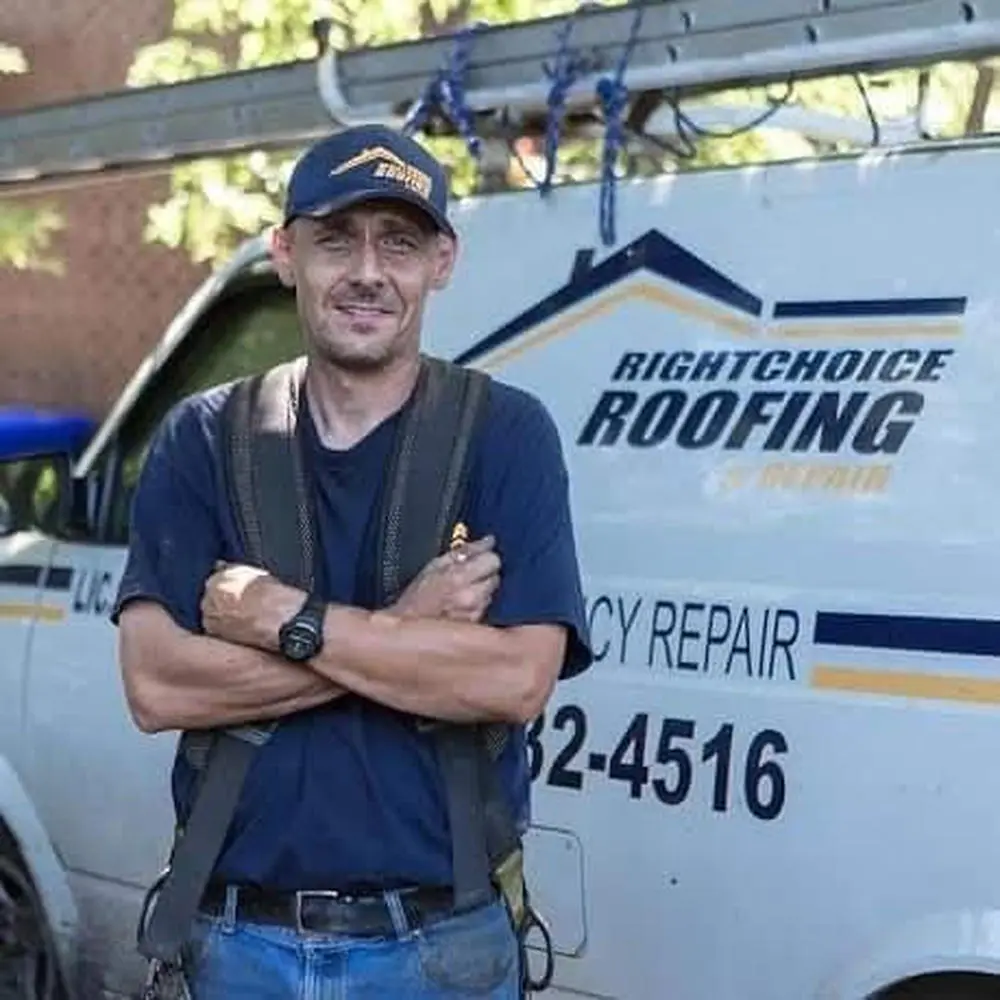
I have been roofing in Toronto since 2007. Over the years, I have watched homeowners get burned in ways that could have been prevented with five minutes of reading. So let me walk you through what the Province actually says, why it matters, and how to use it before the next storm rolls in.
The Numbers Behind the Problem
In one recent reporting year, Ontario received roughly 1,600 complaints about home renovation services. About 21% of those involved roofers. That is not a small percentage. It tells you something important — roofing has more consumer complaints than almost any other home improvement category in the province.
The reason is simple. Roof work is urgent, technical, and hidden. Most homeowners cannot see what is going on up there. That information gap is exactly what predatory operators count on.
The 2024 Numbers Are Even Worse
The latest BBB Scam Tracker Canada Risk Report ranks home improvement scams as the third riskiest scam type reported in Canada. The median reported loss is $1,500. The susceptibility rate — meaning the percentage of people who lose money once they engage with one of these scams — sits at 83.9%.
An Ontario-specific homeowner survey shows even sharper numbers. About 32% of Ontario homeowners say they have been victims of a renovation scam. Roughly half know someone who has. One in five reported being threatened or intimidated.
On top of that, the Canadian Anti-Fraud Centre logged $219 million in reported fraud losses in Ontario in 2024 alone, across 15,855 reports. The real number is much higher. Statistics Canada estimates only about 11% of fraud victims ever file a police report.
Recent Toronto Cases
This is not theoretical. Police have laid charges in several recent local cases:
In April 2026, Toronto Police charged a Brampton man after two elderly homeowners were defrauded by men posing as City of Toronto contractors. The victims paid for fake “roof repairs,” “mandatory backyard clean-ups,” and “emergency home repairs.”
In Ajax, a homeowner paid $18,000 to a roofing crew. The crew then demanded another $50,000 to “finish” the work. The company was not legitimate. In another Toronto-area case, three people were charged after two victims allegedly lost a combined $296,000 in a home-renovation fraud involving mortgage funds and bank drafts.
Toronto Police also recently identified an elaborate roofing scam in which a fraudulent contractor escalated charges over months and even sent in a fake “Interpol officer” to pressure the victim. That scam ran into the tens of thousands of dollars.
These are not isolated incidents. They are the pattern.
The first section of the Ontario guidance is called “Know the risks.” Before any work starts, you need to understand what you are signing up for, both financially and legally.
Read the official Province of Ontario guidance here: Know the risks when hiring a contractor.
Homeowner Liability — The Part That Catches People Off Guard
This is the single most critical legal point in the entire Ontario framework. If a worker gets hurt on your roof, the financial fallout can land on you, the homeowner — not the contractor.
This happens if:
The contractor does not carry valid Workplace Safety and Insurance Board (WSIB) coverage.
The contractor does not have sufficient general liability insurance.
The WSIB Requirement
Roofing is high-risk work. Under Ontario law, almost all construction employers, including roofing companies, must have WSIB coverage for their workers. This insurance system provides benefits to workers injured on the job and, importantly, protects the employer and the person who hired them (you, the homeowner) from being sued over the injury.
You must require that your roofer provides a valid WSIB Clearance Certificate before they start work. This document proves that their WSIB account is in good standing. You can even use the WSIB’s free Check a Clearance online tool to verify a business’s status in real time.
Legality Note: The Ontario guidance on Hiring a roofer explicitly warns homeowners that they “could be held liable if a worker is injured on your property” if the proper coverage isn’t in place. The WSIB’s own policy confirms that starting construction work without a clearance is an offence for both the principal (the homeowner) and the contractor. The clearance is valid for up to 90 days and must remain in effect for the entire job.
The Role of Liability Insurance
While WSIB covers worker injuries, general liability insurance covers damage to your property (like a fallen ladder smashing a window) or your neighbour’s property. Most reputable Ontario roofers carry at least $2,000,000 in Commercial General Liability coverage. Always ask for a copy of their insurance certificate and ensure the policy is active. A legitimate roofer will hand these over without hesitation. If they stall, that is your answer.
Hidden Roof Defects That Quietly Wreck Houses
An honest roof inspection looks for what is wrong underneath, not just what is visible from the ground. A sloppy, predatory contractor will slap new shingles or a new Flat Roofing membrane right on top of failing materials. The leak comes back. So does the rot.
Here are the hidden defects I find most often on Toronto homes:
Soft Roof Decking: Plywood or original Tongue-and-Groove board sheathing that has rotted from years of slow leaks.
Failed Plumbing Vent Flanges: Old rubber boots that should have been swapped out for heavy-gauge aluminum High Dome Plumbing Exhaust Flanges.
Crumbling Chimney Masonry: Deteriorating brick and clay flues that funnel water straight past the Counter Flashing.
Rusted Step Flashing: Old galvanized flashing that should have been replaced with copper flashing.
These problems are invisible from the curb. A real Roof Repair starts with finding them, not covering them up.
The Province’s second step is to research contractors before hiring. The official guidance is on the same page, and there are several dedicated tools you should be using.
Read the official Province of Ontario guidance here: Researching a roofing contractor.
Use the Consumer Beware List Before You Make a Phone Call
This is a free, powerful public tool that almost no one uses. The Province of Ontario maintains the Consumer Beware List, a searchable public database of businesses that have been the subject of a consumer complaint, charge, or conviction under Ontario’s consumer protection laws.
Use this tool before you sign anything: Search the Consumer Beware List.
You should search for any company you are considering. A business on this list has a history of unresolved issues. Postings stay on the list for between 21 and 27 months, so the record is recent and relevant. When searching, try multiple variations of the business name, as some operators rebrand frequently to hide a bad record.
It is also worth reading recent charges and convictions under the Consumer Protection Act and checking the Better Business Bureau for complaint history.
Get Three Quotes — Itemized, in Writing
Ontario explicitly recommends getting detailed, written quotes from at least three different contractors.
Written, not Verbal: Never rely on “napkin numbers” or verbal estimates. Under the Consumer Protection Act, 2002, a contract must be a written document.
Itemized, not Lump-Sum: A quote that simply says “supply and install new roof” for $15,000 is a red flag. A proper, itemized quote breaks down all costs, including:
Labour and Materials (e.g., specific brand of shingle, underlayment, etc.)
Underlayment type (ice and water shield, synthetic, etc.)
Flashing replacement (step, counter, and chimney)
Ventilation systems (plumbing, ridge, or dome vents)
Disposal and dump fees
Any permits needed
Pro Tip: Under the Consumer Protection Act, a company cannot charge you more than 10% above the estimated cost unless you agree to new work at a new price. An itemized quote makes this protection much easier to enforce. Read more about Your rights when starting a home renovation.
Stick With Local Toronto Businesses
The Province specifically recommends hiring local. A real Toronto roofer, like Right Choice Roofing and Repair, has a physical office, a verifiable history in the city, and references you can actually drive past. Out-of-town operators who chase storms across Ontario tend to disappear the moment something goes wrong.
Toronto-Specific Licensing
In Toronto, building contractors are also subject to municipal licensing through the City’s Municipal Licensing and Standards Division. You can verify a business licence directly through the City’s Business Licence Lookup. My company holds Metro Licence #B2-1086.
The third step is reference checking. Most homeowners skip this entirely, or they ask one or two generic questions and call it done. The Province’s own instructions are more thorough.
Read the official Province of Ontario guidance here: References and checking the contract.
Match the Reference to Your Type of Roof
This is the critical detail nobody talks about. A contractor who installs asphalt shingles in a modern subdivision may not be qualified to repair a 1910 Slate Roof in Wychwood Park. Different materials require entirely different skill sets.
You must ask for references on roofs that are functionally identical to yours.
If you have a historical home, ask for references on Slate Roofing.
If you have an addition or a commercial building, ask for Flat Roofing references.
For heritage homes, confirm the contractor is skilled in working with copper flashing, century-old sheathing, and deteriorating chimney masonry.
The Questions That Actually Tell You Something
When you call references, do not just ask “were you happy?” Ask specific, performance-based questions:
Did the project finish on the original quoted price? If not, why?
Did anything get damaged during the work (gutters, garden beds, driveway)?
Was the site cleaned up properly each day? Were nails swept with a powerful magnetic sweep before crews left?
Would you hire this contractor again?
Also ask for references both from the recent past and further back in time. Sometimes problems do not show up for a year or more — exactly the kind of timeline the Province itself warns about.
The fourth section deals with worker safety, an issue that can directly affect your liability as a homeowner. The Province of Ontario states you should ask these questions.
Read the official guidance here: Ask about worker safety on the Hiring a Roofer page, with a deeper resource on training at Training for working at heights.
The Three-Metre Rule and Working at Heights
Under Ontario Regulation 297/13 (Occupational Health and Safety Awareness and Training), any worker on a construction project who could fall more than three metres (about 10 feet) above the ground must use an approved fall protection system. The companion regulation, O. Reg. 213/91 (Construction Projects), sets out the technical fall protection requirements.
Since April 2017, all workers on construction projects who use any method of fall protection must hold a valid, Chief Prevention Officer (CPO)-approved Working at Heights training card. The training is roughly 8 hours, must include hands-on practical components, and the card is valid for three years before requiring a refresher.
That card matters in Toronto specifically. Many of our homes — especially the heritage stock in Lawrence Park, Moore Park, Forest Hill, and Rosedale — sit well over three metres off the ground.
You can find approved training providers and check if a worker’s card is valid through the Province’s official Working at Heights resource page.
What to Ask Before Anyone Sets Foot on Your Ladder
You must explicitly ask the contractor:
Are all your workers WSIB-covered?
Do they all hold current Working at Heights training cards?
Will they be using harnesses, lanyards, and certified anchor points throughout the entire job?
A real, professional contractor will answer all of these questions with direct, confident proof.
This is the most important section in the entire Ontario framework. Roofing contracts protect you — but only if they are written properly and comply with provincial law.
Read the official Province of Ontario guidance here: Create a contract. The primary law governing this is the Consumer Protection Act, 2002.
The 10-Day Cooling-Off Period — Your Most Powerful Right
This is the protection that “storm chasers” and door-to-door scammers fear most. If you sign a roofing contract worth $50 or more inside your home (e.g., at your kitchen table), Ontario’s Consumer Protection Act automatically gives you a 10-day cooling-off period.
During those 10 calendar days, you can cancel the contract for any reason, without penalty. No fee, no questions, no explanation required. This rule is designed to counteract high-pressure sales tactics.
Read your official cancellation rights here: Your rights when you limit or cancel a contract. You can also review the full rules in the Province’s Door-to-door sales and home service contracts guide.
What Every Roofing Contract Must Include
To be legally compliant and protect you effectively, a contract must spell out:
The contractor’s full business name, physical address, and contact details.
A comprehensive description of the work to be completed.
A complete list of all materials to be used, including specific brands and qualities.
The total cost, with a complete itemized breakdown (materials, labour, disposal, taxes).
The deposit amount and the payment schedule (e.g., “50% upfront, 50% upon final completion”).
Explicit start and completion dates, and how any delays will be handled.
A detailed statement of all warranties (both materials and workmanship).
Who is responsible for the cleanup and disposal of all debris.
If a contractor refuses to put any of these items in writing, do not sign the contract. A real contractor, like Right Choice Roofing and Repair, will provide a complete, transparent contract and review it with you before any work begins.
Warranty Wording — Read It Before You Sign It
Roofing warranties are often complex.
Manufacturer Warranties: Warranties on shingles or membranes often require that the installer be certified by the manufacturer. If the contractor is not certified, the manufacturer’s warranty may be void.
Workmanship Warranties: This is the contractor’s own guarantee on their labour. My warranties are 5 years on a Roof Repair, 10 years on a complete shingle or Flat Roof replacement, and 15 years on full Slate Roof replacements — all written into every contract.
Read more about your rights here: Returns, exchanges and warranties.
A Note About Tarion
This is a confusion I hear all the time. Tarion is Ontario’s warranty program for newly built homes. It is administered under the Ontario New Home Warranties Plan Act. Tarion does not cover work done on an existing home by a regular roofing contractor. If your roofer suggests otherwise, that is a problem.
Tarion does, however, cover certain roof issues on new builds — including major structural defects in the roof structure for up to seven years from possession.
The sixth section in the Ontario guide covers the common warning signs of fraud.
Read the official Province of Ontario guidance here: Spot a scam. You can also review the broader list of Common home renovation scams.
The Storm Chaser Knock
After a windstorm or hailstorm hits Toronto, out-of-town crews flood the city. They knock on doors, using a well-worn script: “We were just in the area and noticed some damage on your roof.” They may show you blurry photos of damage that isn’t even from your home. This is a tactic used to secure high deposits for work that is often either never done, done poorly, or balloons in price.
The Toronto Police Service Fraud page warns that these scammers often “find plausible reasons for consumers to give them money and will either deliver shoddy work or no work at all.”
The Wildlife Damage Inflation Scam
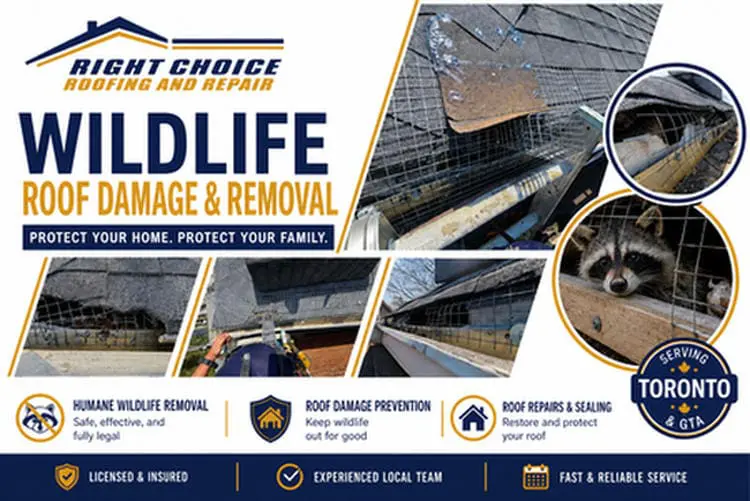
Raccoons and squirrels are a very real problem in Toronto. They often chew through aged Soffits, Roof Edges, and gutter corners to nest in attics. This is genuine damage that must be fixed.
The scam is when a roofer takes a single entry hole and claims your entire roof needs to be replaced immediately, at a cost of $20,000+. The actual fix, including proper reinforced exclusion work, might be $1,500. Always ask for clear photos of the damage. For wildlife issues, contact a licensed wildlife removal company to coordinate the repair.
Cash-Only and Tax-Free “Deals”
A contractor who demands cash, refuses to provide a receipt, or offers to waive the taxes is asking you to waive your legal protection. No receipt means no proof of payment, and no HST registration means no registered business entity. Both are major red flags that strip you of your rights under the Consumer Protection Act.
The Escalating “We Found Another Problem” Scam
This one has become the most common in Toronto over the past two years. A crew starts a $4,000 repair. Once they are on your roof, they suddenly find “rotten decking,” “termite damage,” “structural cracks,” or some other invented issue. The price jumps to $20,000, then $40,000.
In one recent Scarborough case, a senior lost $80,000 to exactly this scam. In another, a homeowner paid $40,000 after a “free inspection” turned into a multi-day extraction. Watch for escalation. Watch for pressure. Watch for crews who refuse to stop work for a second opinion.
The Fake Authority Scam
Some operators now pose as City of Toronto inspectors, building officials, or even fake “Interpol officers” to pressure homeowners. The City of Toronto does not send unsolicited workers to your door to perform repairs. Neither does WSIB. Neither does any utility company. If someone shows up claiming this kind of authority, ask for photo ID and call the agency directly to verify.
If a roofer takes your money, abandons the job, or refuses to honour their contract, you are not out of options.
Read the official guidance here: File a complaint against a roofer, and find the full complaint process at Filing a consumer complaint.
Start With a Formal, Written Notice
Before escalating to the Province, send the contractor a formal written notice of complaint. Document every single problem clearly — what was promised, what was delivered, what is still wrong. Give them a clear, reasonable deadline to fix the issue. Keep copies of this correspondence.
Use this official tool from the Province to help draft your letter: Ontario’s Notice of Alleged Violation of the Consumer Protection Act.
Most reputable contractors will respond once they receive a formal written complaint.
What Happens When You Escalate
If the contractor fails to respond to your written complaint, you can then file a formal complaint with Consumer Protection Ontario (CPO). You can submit a complaint online here, or by email at consumer@ontario.ca. You can also call:
1-800-889-9768 (toll free)
416-326-8800 (Toronto area)
CPO is a government body that:
Invites the business to respond to your complaint.
Attempts to mediate a solution.
Ensures the complaint is tracked in the business’s complaint history.
If the contractor refuses to cooperate, the Ministry can lay formal charges under the Consumer Protection Act. The business may then be added to the public Consumer Beware List, visible to all future customers. Under the Act, a guilty individual can be fined up to $50,000 or sentenced to up to two years less a day in prison.
Report Fraud to the Police and CAFC
If the work has moved past a contract dispute and into outright fraud — fake contractors, fake invoices, demands for cash drafts — you should also report it directly:
Toronto Police Service Online Reporting for fraud over $5,000 or any criminal activity.
The Canadian Anti-Fraud Centre at 1-888-495-8501 or through their online reporting system. Even if you didn’t lose money, reporting helps police track patterns.
Small Claims Court
For unresolved monetary disputes, Ontario’s Small Claims Court is your most accessible option. As of October 1, 2025, the Small Claims Court monetary limit increased from $35,000 to $50,000. That covers the vast majority of residential roofing disputes.
You can file directly online through the Small Claims Court online filing system. The procedures are designed to be navigable without a lawyer.
A Special Note on Toronto Building Permits
This question comes up on every job. Do you need a building permit to replace a roof in Toronto?
The City of Toronto’s official answer is on its When Do I Need a Building Permit page. The short version:
No permit required: Re-roofing your existing home with the same material (e.g., shingles for shingles, slate for slate), as long as no structural changes are involved and the new material does not add more than the equivalent of three layers of asphalt shingle to the dead load on the roof.
Permit required: Any structural alterations — adding a dormer, raising a roof, changing the slope, converting an attic, or removing rafters. Also required for major changes to the roof structure during an addition.
If you live in a Heritage Conservation District — more on that below — additional permits apply even for like-for-like material replacements visible from the street.
If You Live in a Heritage Conservation District, Read This
Toronto has more than 20 active Heritage Conservation Districts. If your home is in one — and many of the most beautiful, historic Toronto neighbourhoods are — your roofing project may require a separate Heritage Alteration Permit under Part V of the Ontario Heritage Act.
The Heritage Conservation Districts most affected by roofing projects include North Rosedale, South Rosedale, Forest Hill, West Annex, Wychwood Park, Cabbagetown, Yorkville-Hazelton, Spadina Garden District, parts of Leaside, and Lawrence Park.
Read the City’s full guide here: Heritage Permit Guide – City of Toronto.
A heritage permit is free. Most minor heritage permits are approved within a week. However, this permit is separate from a Building Permit. If your project requires both, they are processed in parallel.
The Toronto Heritage Grant Program — Money on the Table
Here is something almost nobody knows about. The City of Toronto offers a Heritage Grant Program that covers up to 50% of the cost of slate roof repair or restoration, to a maximum of $20,000.
This is a real grant available to property owners whose homes are designated under the Ontario Heritage Act or contribute to a Heritage Conservation District. The grant also covers eavestrough and downspout work in copper or zinc-coated copper when it is part of a comprehensive slate roof restoration.
If you own a slate-roofed home in any of Toronto’s HCDs, this grant alone can change the math on whether to repair or replace. Applications are typically due in early November each year.
Why This Matters Beyond Just Hiring a Roofer
This legal framework shapes how you should think about your property, your investment, and your liability as a Toronto homeowner.
For Homebuyers and Real Estate Agents
If you are buying a home in Toronto, the roof matters more than most people realize. Standard home inspections often miss critical defects, such as cracked Slate tiles, failing Flat Roof seams, and hidden roof decking rot. Before closing, demand that the seller produce all written records of recent roof work, including contracts, warranties, and contractor certifications. A house with no roof “paper trail” is a house with a huge question mark on top of it.
For new builds, ask whether the home is covered by Tarion and what year of warranty coverage remains. The seven-year structural warranty includes the roof structure.
For Sellers Preparing a Home for Market
A documented Roof Repair history adds verifiable value to your property. Smart buyers and agents are now asking for receipts, warranties, and contractor licences before signing offers. Collect all your records — invoices, before-and-after photos, warranty certificates — and sell from a position of confidence.
For Landlords, Investors, and Property Managers
Commercial Flat Roofing and multi-unit residential properties carry severe extra liability. If a worker is hurt on a property you manage and the contractor is not properly insured, your exposure is significant. You must vet every contractor through the Consumer Beware List, demand WSIB clearance certificates, and never accept a verbal quote on an income-producing property.
A Quick Reference Checklist Before You Sign Anything
Before you hand over a deposit or sign a contract, walk through this short list:
Searched the Consumer Beware List for the company name and the owner’s name.
Checked the Better Business Bureau for complaint history.
Verified a valid WSIB Clearance Certificate.
Confirmed valid Commercial General Liability insurance of at least $2 million.
Confirmed all workers hold valid Working at Heights cards.
Verified the City of Toronto business licence.
Received three written, itemized quotes from local Toronto contractors.
Reviewed at least three references on jobs identical to yours.
Signed a written contract that meets every requirement under the Consumer Protection Act.
Kept the deposit at 10% or less.
Confirmed warranties in writing — both materials and workmanship.
If your home is in a Heritage Conservation District, confirmed Heritage Alteration Permit status.
If you cleared every one of those before signing, you are about 95% protected from the problems I see every season.
Final Thoughts — Prevention Always Beats Repair
Toronto roofs take a beating. Our weather features constant freeze-thaw cycles, winter ice dams, lake winds, and extreme snow loads on Flat Roofs. The good news is that almost every disaster I see could have been avoided with a better hiring decision.
The goal of this entire guide isn’t to scare anyone. It’s to ensure you know about the powerful, legal protections that already exist for you in Ontario. A homeowner who uses these tools almost never gets burned.
Bookmark this page. Share it with anyone you know who is planning roof work, buying a home, or selling one. Every link in this article is a real resource you can use today, before the next storm rolls in.
Thanks for reading.
Frank
Owner, Right Choice Roofing and Repair