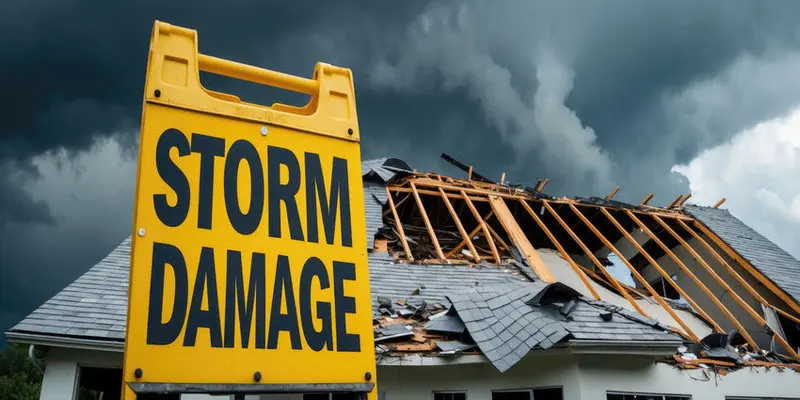
I have been in the roofing business in Toronto since 2007. In that time, I have seen just about everything a roof can go through in this city. And this past winter — February and March 2026 — was one of the worst I can remember for ice dam damage.
My phone did not stop ringing for weeks.
Homeowners called with water pouring through ceilings. Business owners dealt with saturated insulation, stained drywall, and mould growing behind walls. I had one client in North York who noticed a small ceiling stain going into January. By February, her attic insulation was completely soaked. The drywall in two rooms had to come down. Her basement flooded twice from the overflow.
What started as a simple repair conversation turned into a $40,000 situation. Most of that damage was preventable.
That is why I am writing this post.
The repair vs. replace decision is one of the most important calls you will ever make about your property. Get it right and you protect your investment. Get it wrong — or hire the wrong contractor — and you can end up spending three or four times more than you needed to.
I am not writing this to sell you anything. I am writing it because too many Toronto homeowners get burned, get misled, or make the wrong call simply because nobody gave them straight information. This post is that straight information.
What This Winter Did to Toronto Roofs — The Full Picture
Let me start here because it changes everything that follows.
This past winter was brutal in a very specific way. We had repeated freeze-thaw cycles throughout February and into March. Temperatures climbed above zero during the day and melted snow sitting on roofs. Then they plunged back below freezing overnight. That cycle — over and over — is exactly what creates ice dams.
An ice dam forms when heat escaping from your attic warms the roof deck from below. The snow on the warm upper roof melts and runs down toward the eaves. When it hits the cold roof edge, it refreezes. The ice builds up. The water behind it has nowhere to go. So it backs up under your shingles, gets past the underlayment, soaks the decking, and works its way into your home.
Here is what most people do not realize. The ice dam itself is not your core problem. The ice dam is a symptom. The real problem is heat escaping from your attic because of inadequate insulation, poor ventilation, or air leaks around pot lights, plumbing stacks, and attic hatches.
Every home I visited this winter with serious ice dam damage had one thing in common. The attic was either under-insulated, under-ventilated, or both.
The Damage Goes Much Deeper Than a Ceiling Stain
By the time a water stain appears on your ceiling, the damage has already been happening for days — sometimes weeks.
I saw ice dam damage claims this season ranging from $3,000 for minor repairs all the way to over $40,000 when mould remediation, structural repairs, and full interior restoration were factored in. Several homeowners told me their insurance either denied the claim entirely or paid far less than the actual damage.
If your home or building showed any ice dam activity this winter — even minor icicles at the eaves — do not wait until fall to get it looked at. The damage underneath is almost always worse than what you can see from the ground.
Every Way Ice Damming Damaged Toronto Properties This Winter
This is the section no other roofing blog in Toronto is giving you. After responding to dozens of ice dam calls this season and researching what homeowners across the city experienced, here is the complete picture of what this winter actually did to roofs, drainage systems, interiors, and wallets.
1. Roof Surface Damage
The shingles are the most visible part of the roof — but they are often the last place homeowners look when ice dam damage is involved.
As water backed up behind ice dams this winter, it crept between shingles and froze. The expansion cracked and lifted shingles away from the roof surface. Each freeze-thaw cycle made the gap wider and let in more water. Many homeowners discovered entire sections of shingles had loosened without ever seeing a single shingle on the ground.
Underneath the shingles, the underlayment absorbed moisture and tore in some cases. The wood decking beneath that began to soften, swell, and rot — often completely invisible from the surface until a contractor physically gets on the roof and probes the decking.
Homes without a proper ice-and-water shield membrane installed at the eaves had no secondary protection once water moved past the shingles. This is a code requirement in Ontario for good reason. If your roof was installed without it, you need to know that going into your next repair or replacement conversation.
2. Drainage System Collapse
This was one of the most widespread and dramatic damage categories this winter. I saw it on property after property across Toronto.
Ice dams can weigh hundreds of pounds. That weight pulled eavestroughs completely away from the fascia on homes throughout the city. Fasteners ripped out. Eavestroughs bent, twisted, and in some cases fell entirely. The fascia underneath was left exposed to the elements with winter still ongoing.
Downspouts froze solid. When a downspout freezes from the bottom up, the ice has nowhere to expand except outward. The metal flexes, cracks, and splits — particularly at seams and elbows. Many homeowners discovered cracked downspouts only in spring when they saw the water spraying sideways instead of flowing down.
Leaf debris left from fall was another major culprit. It froze solid inside eavestroughs and downspouts, creating plugs that backed water up the entire drainage chain. With nowhere to go, meltwater overflowed the back of the eavestrough and ran directly down behind the fascia and into the soffit cavity.
Toronto semi-detached homes were particularly vulnerable. Their rooflines funnel large volumes of meltwater into a very limited number of downspouts. When those freeze, the entire drainage system backs up almost immediately.
3. Fascia and Soffit Damage
When eavestroughs fail, the fascia and soffit take the next hit.
Fascia boards — especially older wood fascia — split, cracked, or pulled away when loaded eavestroughs dragged against them all winter. Water running behind the eavestrough soaked the fascia continuously. By spring, many homeowners discovered the fascia was rotted through — not just damaged, but structurally compromised.
This matters enormously if you are planning eavestrough repairs this spring. New eavestroughs mounted on rotted fascia will sag and pull away again within a single season. Any contractor who quotes eavestrough work without inspecting the fascia first is setting you up for the same problem next winter.
Soffit vents blocked with ice cut off the cold air intake that keeps attics properly ventilated. With soffit vents plugged, the ventilation cycle broke down completely — making the conditions inside the attic worse throughout the coldest part of the season. Soffit panels warped, cracked, and in some cases collapsed at corners where the ice load was heaviest.
4. Interior Ceiling and Structural Damage
This is where ice dam damage gets genuinely dangerous — and genuinely expensive.
Water does not fall straight down inside a wall or ceiling cavity. It travels. It runs along rafters, ceiling joists, and framing members before it appears as a stain. This means the stain you see on your ceiling may be several feet away from where the water actually entered the structure. It also means the damage visible from inside the house is almost always only part of the full picture.
This winter we saw drywall softening and sagging in homes across Toronto. In the most severe cases — and these were real situations this season — ceilings collapsed. The combined weight of saturated insulation and wet, swollen drywall became too much. Ceiling panels dropped. In every one of those cases, there had been visible warning signs for weeks that were not acted on quickly enough.
Attic insulation that absorbs water loses all its thermal value. It becomes dead weight that promotes mould and needs complete removal and replacement. That is a significant additional cost on top of whatever structural repairs are required.
In the worst cases we assessed this season, the roof rafters and attic joists showed signs of rot and early mould growth. These are structural components. Repairing them moves beyond roofing and into general contracting work — and the costs climb steeply.
5. Mould and Air Quality Damage
Mould is the damage that keeps costing money long after the ice is gone.
Saturated insulation in a sealed winter attic is a perfect environment for mould growth. It spreads before it is ever discovered. Water running down interior wall cavities creates mould behind drywall in spaces that cannot be seen or smelled until the problem is advanced. Mould on structural wood — rafters, decking, ridge boards — requires professional remediation, not just treatment.
The health implications are real. Mould from ice dam damage has documented effects on respiratory health — particularly for children, elderly residents, and anyone with asthma or allergies. A home with significant attic mould is not safely livable without proper remediation.
6. Safety Hazards
Ice dam damage is not just a property issue. It is a safety issue.
Large icicle formations and sheets of ice sliding off roofs created genuine hazards on walkways and driveways across Toronto this winter. Water reaching pot lights and junction boxes in ceilings created fire and electrocution risks in numerous homes. Meltwater refreezing on driveways and steps caused slip-and-fall accidents.
Homeowners who tried to chip ice dams off their roofs themselves caused additional shingle damage and several ended up falling. This is not a DIY job. Professional removal — done properly with the right equipment — protects both the person doing the work and the roof being worked on.
7. Insurance Claim Nightmares
This is the part of the story that made many Toronto homeowners the most angry this winter. And rightfully so.
Many homeowners assumed their insurance would cover the damage. In a large number of cases, it did not — or it paid far less than the actual cost of repairs.
The most common reason for denial was “lack of maintenance.” Insurers argued the damage resulted from pre-existing insulation or ventilation deficiencies rather than from the storm itself. If your attic insulation was below current Ontario Building Code standards — which requires R-50 or higher — your insurer may use that against your claim.
Insurance adjusters offered to patch and paint the visible ceiling stain. The actual damage — saturated insulation, rotted decking, hidden mould behind walls — went unaddressed. In one documented case this season, an insurer offered $4,500 for a situation that turned out to involve $28,000 in real damage once properly assessed with moisture meters and thermal imaging.
Ice dam removal itself is typically not covered. Most policies cover resulting interior damage but not the $300 to $1,500 cost of actually removing the ice from the roof. Homeowners were shocked to discover they were paying out of pocket to stop the active damage while also fighting for coverage of the damage already done.
Mould that developed gradually is almost universally excluded. If the water entry was slow and the mould spread over weeks, most insurers treat it as a maintenance issue rather than a sudden event.
Condo owners were particularly hard hit. Standard condo policies often do not cover ice dam damage without a specific endorsement. Many discovered this gap only after filing a claim.
The bottom line on insurance: document everything immediately. Take photos of the ice dam, the eavestroughs, the water entry points, and every interior stain. Do not let a contractor remove the ice before you have documented the full scope. And before you accept any initial settlement offer, have a contractor with proper inspection tools — including moisture meters — assess the full scope of the damage. The first offer is almost never the right offer.
The 10 Biggest Problems Toronto Homeowners Face When Hiring a Roofer
Before I get into the repair vs. replace breakdown, I want to address something the research and my own experience both confirm. The biggest issue in this industry is not always the roof itself. It is the contractor.
Problem 1 — Being Pushed Into a Replacement You Do Not Need
This is the most common complaint I hear. A contractor shows up, barely looks at the roof, and immediately recommends a full replacement. Sometimes that is the right call. Often it is not.
A roof with isolated damage and a sound structure can almost always be repaired for a fraction of the replacement cost. Always get a second opinion before agreeing to a full replacement.
Problem 2 — Paying a Deposit and Never Seeing the Contractor Again
Roofing scams are a documented problem in Toronto — particularly in East York, Scarborough, and Etobicoke. The typical scam involves a contractor collecting a large upfront deposit in cash and then disappearing.
A reputable company will never demand full payment in advance. Cash-only demands are a red flag every single time.
Problem 3 — Vague Quotes With Hidden Costs Added Later
A homeowner agrees to a price. Work starts. Then additional charges appear partway through the job — for things that should have been identified in the initial inspection.
A legitimate quote is written and itemized. It covers materials, labour, tear-off and disposal, expected underlayment or decking repairs, and taxes. If a quote is a single number with no breakdown, do not sign it.
Problem 4 — Poor Workmanship That Fails Within a Few Years
Most roofing failures occur within the first five years and are caused by poor installation — not defective materials. Improperly installed shingles, inadequate flashing, missing underlayment, and incorrect nail placement can all void a manufacturer’s warranty and cause leaks within years of the job being done.
Problem 5 — No Proof of Insurance or WSIB Coverage
If a worker is injured on your property and the contractor does not carry proper WSIB coverage and general liability insurance, you could be held liable. Always ask for insurance certificates before any work begins.
Problem 6 — Warranty Promises That Exist Only on Paper
Some contractors offer impressive-sounding warranties. Then when a problem appears, the company is unreachable or refuses to honour the warranty.
Ask specifically: is this a manufacturer’s warranty on materials, or a workmanship warranty on labour? Get the answer in writing before the job starts.
Problem 7 — No Verifiable Business Presence in Toronto
A contractor who operates out of a truck with no verifiable address, no business registration, and no local reviews is a serious risk. Storm chasers move through neighbourhoods after heavy weather, collect deposits, do little or no work, and move on.
Check Google reviews, HomeStars, and the BBB before you hire anyone.
Problem 8 — Replacing a Roof Without Fixing the Root Cause
A new roof goes on over a poorly ventilated attic. The new shingles age at twice the normal rate. Ice dams return the following winter. Leaks reappear in the same areas.
The root cause — usually ventilation, insulation, or failing flashing — was never addressed. A good contractor inspects the full system, not just the surface.
Problem 9 — No Cleanup After the Job Is Done
Old shingles, nails, debris, and wrapping left on the lawn and in the garden. This is a legitimate and common complaint from Toronto homeowners. A professional crew protects your property during the job and leaves the site clean when the work is done.
Problem 10 — Patching Ice Dam Damage Without Fixing the Cause
This winter I was called in behind several contractors who had patched ice dam entry points without ever discussing insulation, ventilation, or root cause. The patches failed. The damage continued. The homeowners spent more money than a proper fix would have cost the first time.
Repair or Replace: The Honest Breakdown by Roof Type
Now let us get into the core decision.
The answer is almost never obvious from the ground. It requires getting on the roof, checking the decking, looking at the attic, and understanding the full history of the system.
Here is the general framework I use after nearly two decades in this business. If the damage is isolated to one area and your roof is under 15 years old, a targeted repair is almost always the right call. If the damage is widespread, if the decking is compromised, or if your roof is past its expected lifespan, replacement is the smarter long-term investment.
The specific factors change depending on roof type. Here is how it breaks down.
Asphalt Shingle Roofing — Repair or Replace?
Asphalt shingles are the most common roofing material in Toronto. They work well in our climate and handle freeze-thaw cycles reliably when properly installed and ventilated.
A standard three-tab shingle roof lasts 20 to 25 years. Architectural shingles can reach 25 to 30 years with proper maintenance. When problems appear, the age of the roof and the scope of the damage determine which path makes sense.
Signs You Can Repair Your Asphalt Roof
A repair makes sense when the damage is limited and the structure is sound:
- Missing or cracked shingles in one localized area after a storm
- Flashing failure around a chimney, skylight, or vent pipe
- A single leak tracing to one identifiable entry point
- Granule loss in one section while the rest of the roof is intact
- The roof is under 15 years old and in otherwise good condition
Signs You Need to Replace Your Asphalt Roof
Replacement becomes the right call when problems are widespread or structural:
- Shingles curling, buckling, or cracking across multiple sections
- Heavy granule loss throughout — bare asphalt visible in many areas
- Multiple leaks appearing in different locations across the roof
- Soft spots or sagging indicating rotted decking underneath
- The roof is 20 years or older with consistent deterioration across the surface
- Mould, saturated insulation, or moisture damage visible in the attic
What It Costs in Toronto Right Now
A targeted asphalt shingle repair in Toronto typically runs between $300 and $1,500 depending on scope. A full residential roof replacement falls between $7,000 and $15,000 for most homes, depending on size, pitch, and materials.
If you are spending $500 or more per year on repeated repairs to the same roof, a full replacement will almost certainly save you money over the next five years.
Flat Roofing — Repair or Replace?
Flat roofing is standard on commercial buildings throughout Toronto. It is also common on row houses, additions, garages, and many modern residential properties.
Without adequate slope for drainage, flat roofs are more vulnerable to pooling water, membrane failure, and seam separation. They need more regular inspection than sloped roofs — especially after Toronto winters.
This past season was particularly hard on flat roofs. Repeated freeze-thaw cycles caused membrane expansion and contraction that opened seams and blisters that had been dormant for years. Several commercial property owners I spoke with this season had not had their flat roofs inspected in two or three years. That gap cost them significantly.
The Three Main Flat Roof Systems in Toronto
- EPDM rubber membrane — flexible, durable, and excellent for low-slope applications
- SBS modified bitumen — torch-applied, strong waterproofing, handles Toronto winters well
- TPO and PVC membranes — energy-efficient options used across residential and commercial flat roofs
Knowing which system you have matters before making any repair or replacement decision. Each has a different expected lifespan and responds differently to our climate.
Signs You Can Repair Your Flat Roof
Repairs make sense when the membrane is largely intact and damage is isolated:
- A single blister or bubble has formed in the membrane
- A seam has separated in one localized area
- A drain is blocked and causing localized pooling without membrane damage
- A small puncture or crack with no underlying deck damage
- The flat roof system is under 10 years old and has been maintained
Signs You Need to Replace Your Flat Roof
Flat roofs give clearer replacement signals than sloped roofs. Do not ignore these:
- Multiple blisters and bubbles spread across large areas of the membrane
- Widespread seam failure — water getting under the membrane in multiple locations
- Water pooling that has not drained 48 hours after rain
- Interior water damage appearing in multiple areas below the flat roof
- The membrane cracking, splitting, or becoming brittle throughout
- The system is 15 to 20 years old with repeated repairs that keep failing
Commercial Flat Roof Owners — Read This Section Carefully
If you own or manage a commercial building in Toronto, the stakes on flat roofing decisions are higher than they are for residential properties.
A failing flat roof can damage inventory, disrupt daily operations, create liability exposure, and trigger insurance complications. I recommend annual flat roof inspections for all commercial properties — minimum.
Catching a seam failure or drain issue early is the difference between a $500 repair and a $20,000 emergency replacement. Right Choice Roofing and Repair provides commercial flat roof assessments with written reports. No obligation and no pressure.
Slate Roofing — Repair or Replace?
Slate is in a category of its own. A properly installed natural slate roof can last 75 to 100 years or more. The decision to repair or replace a slate roof carries serious financial weight.
We specialize in slate roofing at Right Choice Roofing and Repair. I have personally worked on Toronto homes where the slate was still performing beautifully at 80 years old. I have also been called in after another contractor convinced a homeowner to tear off a slate roof that only needed a handful of individual slate replacements and a flashing repair. That homeowner spent tens of thousands of dollars they did not need to spend.
Slate requires expert evaluation. Do not let a general roofing contractor make that call without documented slate experience.
Signs You Can Repair Your Slate Roof
Most slate problems are repairable when the structure underneath is sound:
- Individual slates cracked, broken, or slipped out of position
- Flashing failure around chimneys, valleys, or dormers
- The ridge cap needs attention but the field slates are solid throughout
- A small section damaged by a falling branch or impact
- The slate is structurally sound but copper nails have corroded
Matching replacement slates to your existing roof takes skill and proper sourcing. Using the wrong thickness or type of slate causes problems for years. Always verify that your contractor has real, documented slate experience — not just a line on their website.
Signs You Need to Replace Your Slate Roof
Full slate replacement becomes necessary when:
- More than 30 percent of the tiles are cracked, broken, or missing
- The slate has become soft and porous — it crumbles or flakes when handled
- Wood decking or battens underneath have rotted beyond repair
- Flashings have failed so extensively that water has damaged the underlying structure
- The roof has reached the end of its natural lifespan with uniform deterioration throughout
A full slate replacement from Right Choice Roofing and Repair includes our 15-year workmanship warranty. We use only natural slate — never synthetic alternatives — and we source materials that match the character of your home.
What To Do Right Now If You Had Ice Dam Damage This Winter
This section is for every Toronto homeowner and business owner who dealt with ice dams this past season — even minor ones.
Here is what needs to happen before next winter arrives.
Get a proper roof inspection. Not a drive-by assessment from the ground. A contractor who gets on the roof and checks the decking, flashing, underlayment, and eave conditions. Ask specifically whether ice-and-water shield membrane is present at the eaves. If it is not, it needs to be added during your next repair or replacement.
Have your attic assessed. The attic is where ice dam problems start. Check your insulation levels. Ontario Building Code currently recommends R-50 or higher. If you are below that, upgrading before next winter is one of the best investments you can make. A proper insulation upgrade typically costs $2,000 to $4,000. The ice dam damage it prevents can easily be five to ten times that amount.
Inspect every component of your drainage system. Check the eavestroughs for pulling, sagging, and separation from the fascia. Check the fascia boards for rot — especially behind the eavestroughs where water has been running. Check every downspout for cracks at the seams and elbows. Check that downspout extensions discharge water at least four feet from your foundation.
Look at your soffits carefully. Blocked or damaged soffit vents cut off the cold air intake your attic needs. Cracked or warped soffit panels need to be replaced before fall.
Document everything before any repairs begin. If you are planning to file an insurance claim — or if you already filed one and are not satisfied with the settlement — document the full scope of the damage with photos, video, and ideally a written contractor assessment. The first offer from an insurer is almost never the full picture. A proper inspection with moisture meters reveals damage that a visual check completely misses.
How to Choose the Right Contractor Without Getting Burned
A trustworthy roofing contractor inspects your roof in person before making any recommendation. They get up there. They look at the decking, the flashings, the ventilation, and the underlayment condition. They show you photos or video of what they found. They explain clearly — in plain language — why repair or replacement is the right call.
What a Legitimate Quote Looks Like
A professional quote is written and itemized. It breaks down materials, labour, tear-off and disposal, any expected structural repairs, and what is and is not included. Not a ballpark. Not a number on the back of a business card. A document you can review before signing anything.
What to Verify Before You Hire Anyone
- WSIB coverage and general liability insurance — ask for the certificates before work starts
- Verifiable Google, HomeStars, or BBB reviews from real Toronto customers
- A physical business address and an established history in this city
- A written workmanship warranty — separate from the material warranty — provided before work begins
If any of those things are missing, keep looking.
What Right Choice Roofing and Repair Offers Toronto Homeowners and Businesses
Right Choice Roofing and Repair has been serving Toronto homeowners and commercial property owners since 2007. We hold a 4.9-star Google rating, BBB accreditation, and TrustedPros certification.
We are not the biggest roofing company in Toronto. We are a local operation with nearly 20 years in this city. Our reputation is built entirely on repeat clients and referrals.
We do not upsell replacement when a repair will do the job. We do not patch a roof that genuinely needs replacing just to keep the invoice low. We give you the honest answer — even when that means telling you to wait.
Our Services
- Asphalt shingle roofing — residential and commercial sloped roofs
- Flat roofing — EPDM, SBS modified bitumen, TPO, and PVC systems
- Slate roofing — natural slate installation, repair, and restoration
- Eavestrough repair and replacement
- Soffit and fascia repair and replacement
- Emergency roof repairs
- Ice dam removal and prevention
- Roof snow removal
- Wildlife damage repair
- Roof inspections with written reports
Every project includes our 2-year workmanship warranty on repairs, 10-year warranty on shingle and flat roof replacements, and 15-year warranty on slate replacements.
The Bottom Line
The repair vs. replace decision is not something to make in the driveway. It is not something to decide based on a quick glance from the ground or a conversation with a contractor who just knocked on your door.
It requires a proper inspection. It requires someone who understands the full roofing system — not just the surface. And it requires a contractor who will give you the honest answer, not the most profitable one.
This spring, after the winter Toronto just had, I strongly recommend that every homeowner and commercial property owner get a professional roof inspection. Catching a problem now — before another winter — costs a fraction of what it costs to deal with it after the fact.
Call us. We will tell you exactly what we see, exactly what it means, and exactly what we recommend. No pressure, no jargon, and no upselling.
❓ FAQ Section — Repair or Replace? Toronto Roof Guide 2026
How do I know if my Toronto roof needs to be repaired or fully replaced?
The answer comes down to two things — the age of your roof and the scope of the damage. If your roof is under 15 years old and the damage is isolated to one area, a targeted repair is almost always the right call. If your roof is 20 years or older, if shingles are failing across multiple sections, or if your attic shows moisture damage or mould, replacement is the smarter long-term investment. The only way to know for certain is a proper inspection by an experienced contractor who physically gets on the roof and checks the decking, flashing, and underlayment — not just the surface from the ground.
How much does roof replacement cost in Toronto in 2026?
For most Toronto homes, a full asphalt shingle roof replacement runs between $7,000 and $15,000 depending on the size of the roof, the pitch, and the materials chosen. Premium materials like metal, slate, or clay tile can push the cost significantly higher — sometimes well above $25,000 for larger or more complex roof structures. Labour typically makes up 50 to 60 percent of the total cost. Always get a written, itemized quote that breaks down materials, labour, tear-off and disposal, and any expected structural repairs. A single number with no breakdown is not a proper quote.
Did the winter of 2026 cause ice dam damage to my roof even if I did not notice any leaks?
Yes — and this is exactly what makes ice dam damage so dangerous. By the time a water stain appears on your ceiling, the damage has often been happening for weeks. This past winter's repeated freeze-thaw cycles caused widespread damage across Toronto that many homeowners have not yet discovered. Water backs up under shingles, saturates attic insulation, travels along rafters, and creates mould in wall cavities — all without any visible interior sign until the damage is advanced. If your home had icicles at the eaves or any ice buildup in your eavestroughs this winter, get a professional roof inspection before next fall. The cost of catching the problem now is a fraction of what it costs after another winter.
Will my home insurance cover ice dam damage to my roof and interior?
It depends on your policy and how the damage is documented. Most standard Ontario home insurance policies cover sudden and accidental water damage caused by ice dams — including interior damage to ceilings, walls, and insulation. However, insurers frequently deny or underpay claims by arguing the damage resulted from inadequate maintenance, poor insulation, or pre-existing ventilation problems rather than from the storm itself. Ice dam removal is typically not covered — only the resulting damage may be. The most important thing you can do is document everything immediately with photos and video before any repairs begin, and have a contractor provide a written assessment of the full scope of damage. Never accept the first settlement offer without verifying the true extent of the damage.
How do I avoid hiring the wrong roofing contractor in Toronto?
There are a few non-negotiables when hiring a roofer in Toronto. First, always ask for proof of WSIB coverage and general liability insurance before any work starts — a legitimate contractor provides these without hesitation. Second, insist on a written, itemized quote that breaks down every cost. Third, check their Google reviews, HomeStars rating, and BBB standing before you commit. Fourth, be cautious of any contractor who recommends a full replacement without physically getting on your roof, demands full cash payment upfront, or shows up unsolicited after a storm. Right Choice Roofing and Repair has served Toronto homeowners and commercial property owners since 2007. We hold a 4.9-star Google rating, BBB accreditation, and TrustedPros certification — and we back every job with a written workmanship warranty.